As I launch this virtual space, I want to begin with my Land Acknowledgement and a brief discussion around it. My intention is multifold: to share who I am and my understanding of my relationship to the land and the First Peoples of the land I call home; to establish this virtual space as one that is committed to a respectful relationship with Indigenous Peoples; and to support others in considering the value of creating their own Land Acknowledgement, and to be empowered to delve into the work themselves.
My Land Acknowledgement
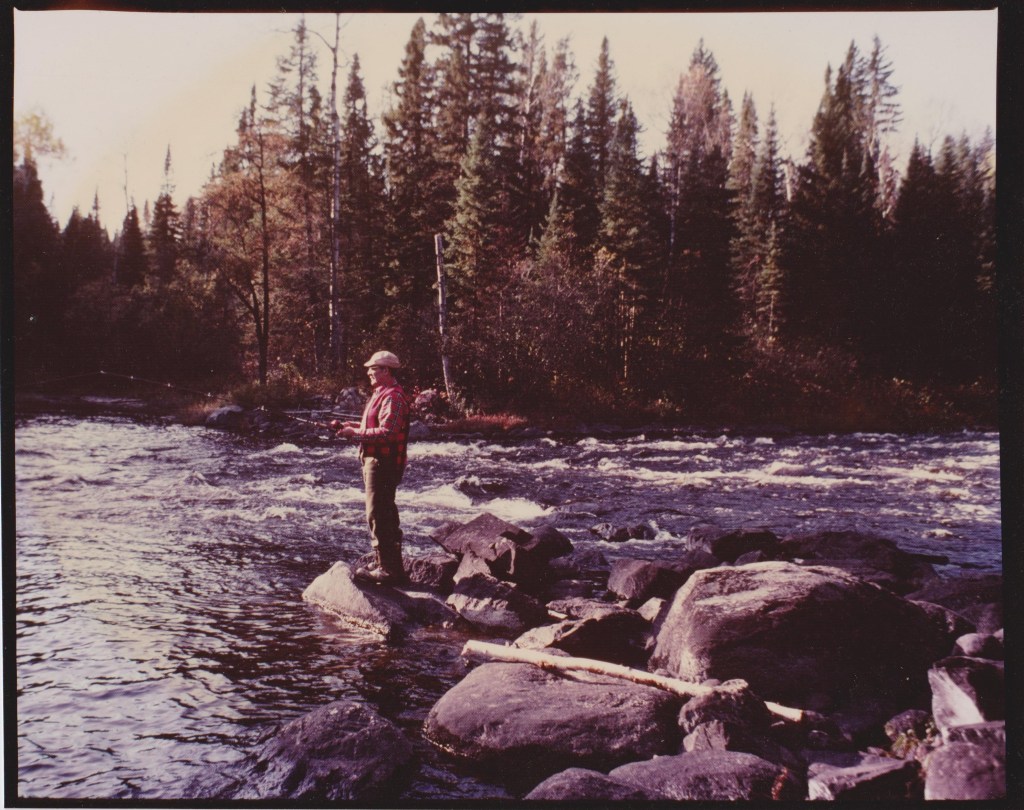
I am of Estonian and British descent. My grandpa recently passed away, and I was very fortunate that he shared with me the story of how his side of our family came to call this land home. He told the story of arriving in Canada with his small family when my dad was just 3, and ending up in Thunder Bay, in the land of the Fort William First Nation and of the Robinson Superior Treaty of 1850. My grandpa remembered being at a train station and seeing a man fishing at a nearby lake. He told of how every time this man cast his line, he reeled in a big, beautiful fish. And my grandpa, an outdoorsman at heart, said that’s when he knew he and his family, who were displaced from their homeland, had found their new home.
My family has found a home here, and through the generations, as we have moved across this land, we all continue to benefit from the beautiful rivers and lakes, forests and fields. The land where my family and I now call home is the land of the Wendat, Haudenosaunee and Anishinaabe people, and is the land of the First Peoples of the Williams Treaties. The closest First Nations community to our home is that of the Chippewas of Georgina Island. I’m grateful to them, and to all of the Indigenous Peoples who have lived in this land since time immemorial; for taking care of this land, and for welcoming new people to share this land with them.
Writing a Land Acknowledgement
I have found that writing a Land Acknowledgement is a reflective process. It has allowed me to reflect upon my family’s history and begin to consider how our story intersects with the history of the land and its First Peoples. It has allowed me to learn about whose land I live and learn in, and who specifically I need to build relationships with.
A Land Acknowledgement becomes a means to do something; to become an active participant in learning the Truth of this land and its First Peoples so that we may work towards finding a path towards Reconciliation.
The Land Acknowledgement I write tomorrow will not look like the Land Acknowledgement that I have shared today. This is because it is not a “one and done” creation. Rather, it is a living document that reflects my current relationship with the land and its First Peoples. And like any relationship, it will grow as I tend to it. And as we work together and make more room in our society for Indigenous voices to be amplified and heard, this too, will impact this relationship, and therefore my Land Acknowledgement as well.
In sharing this post, my hope is that it inspires others to take the time to consider writing their own Land Acknowledgement; to reflect upon their family’s story and relationship to the land, and to become more aware and thoughtful about whose land they live in. I encourage you to write your own, if you haven’t already. Particularly for those of us engaging young people and communities with learning and developing relationships with the land.
Should you be inspired, I am sharing below some resources that may be of help to you as you delve into your own Land Acknowledgement. Should you know of more resources, or wish to add constructive comments to further the discussion around Land Acknowledgements, please feel welcome to comment below.
May we grow together!
Tiiu
Resources:
https://www.whose.land/en/
This is a great mapping resource where you can investigate who’s land you are on and what treaty land you are on; there are links to Indigenous communities and treaties
https://native-land.ca/territory-acknowledgement/
An Indigenous-led, Canadian not-for-profit organization lending guidance on creating a Land Acknowledgement.
https://www.yrnature.ca/acknowledging_land
The York Region Nature Collaborative blog article, written by Hopi Lovell Martin, “Acknowledging Land.” It has a great exemplar at the end of the article.
https://apihtawikosisan.com/2016/09/beyond-territorial-acknowledgments/
A great article by âpihtawikosisân entitled “Beyond Territorial Acknowledgements”.
 Land Heart Song
One thought on “Land Acknowledgements”