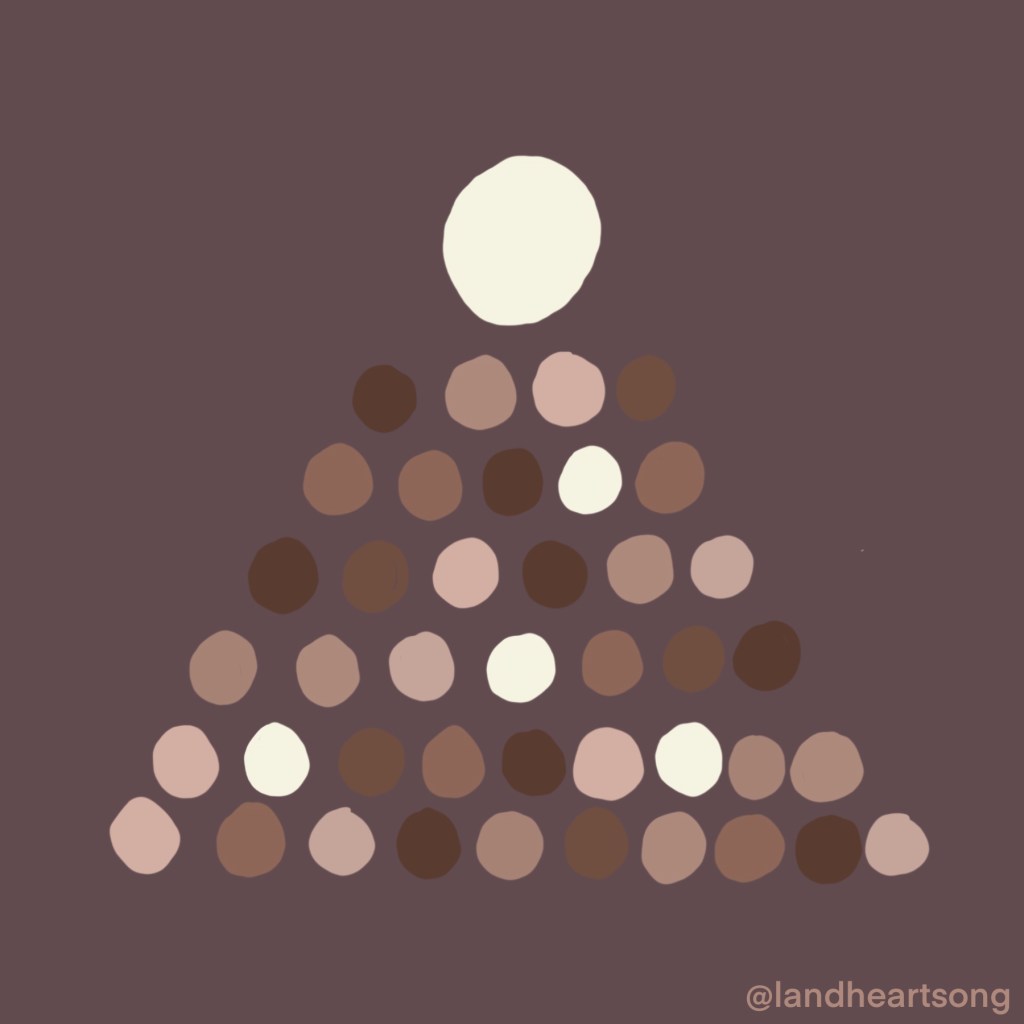
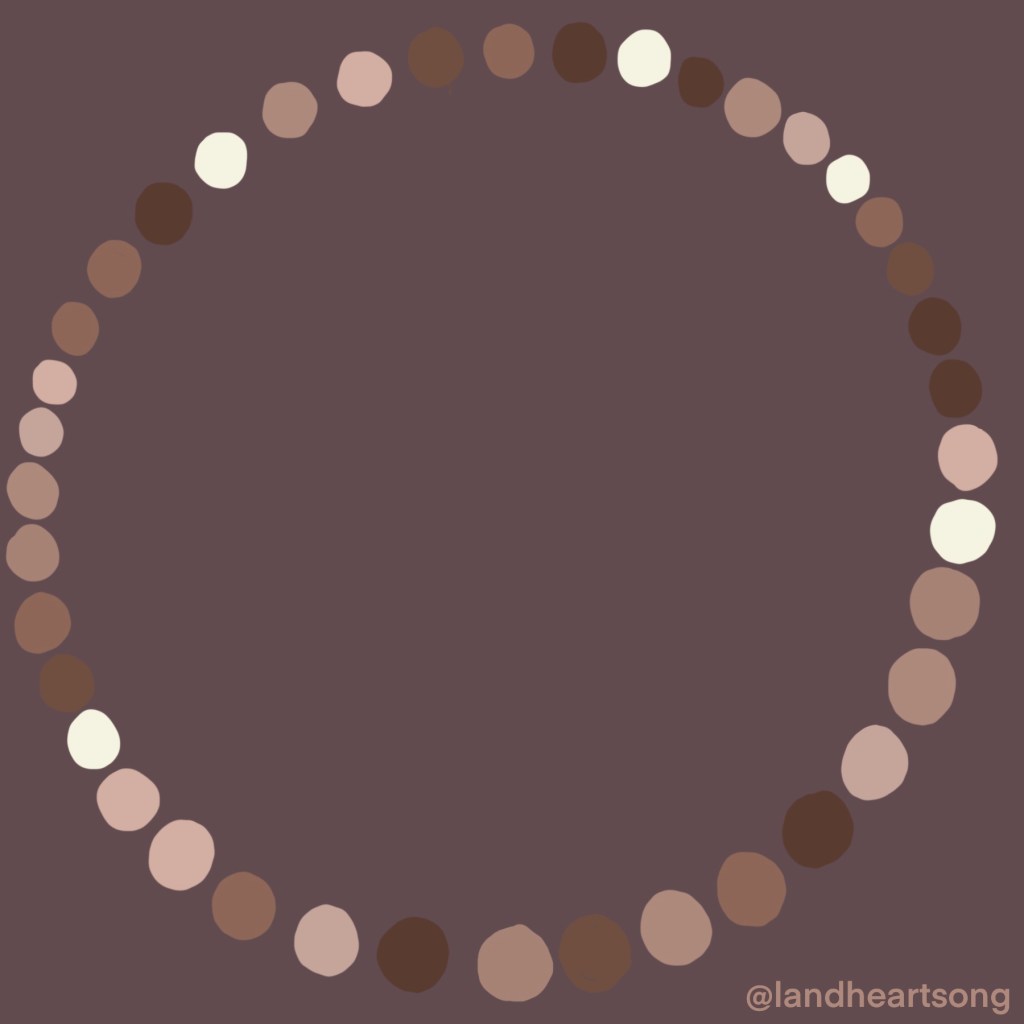
A number of years ago, I watched Robin Wall Kimmerer share a presentation hosted by the University of Toronto. Kimmerer is a member of the Citizen Potawatomi Nation and a decorated professor of Environmental Biology, and I had already had the opportunity to learn with her through her book “Braiding Sweetgrass”. In this book, she explores how we might bring two worldviews together, offering her Indigenous teachings and her academic learning, to take better care of this world. “Braiding Sweetgrass” had a profound impact on me, and so, I suppose it is no surprise to me that Kimmerer’s presentation got me thinking, too. In her presentation, Kimmerer shared her thoughts around the triangle and the circle, and I have since spent a lot of time thinking about her words. Today I’ll share with you where this thinking has gotten me, and how I now see the connections between the triangle, the circle, music, climate action and social justice.
In her presentation, I heard Kimmerer talk about how dominant society has been taking part in a great science experiment that places humans as a dominant species, like at the top of a triangle, and all other beings below us. I heard Kimmerer share about how that science experiment has failed, and how there is value in considering the value of her Indigenous worldview, where the human species live in relation with all other beings as equal, like within a circle.
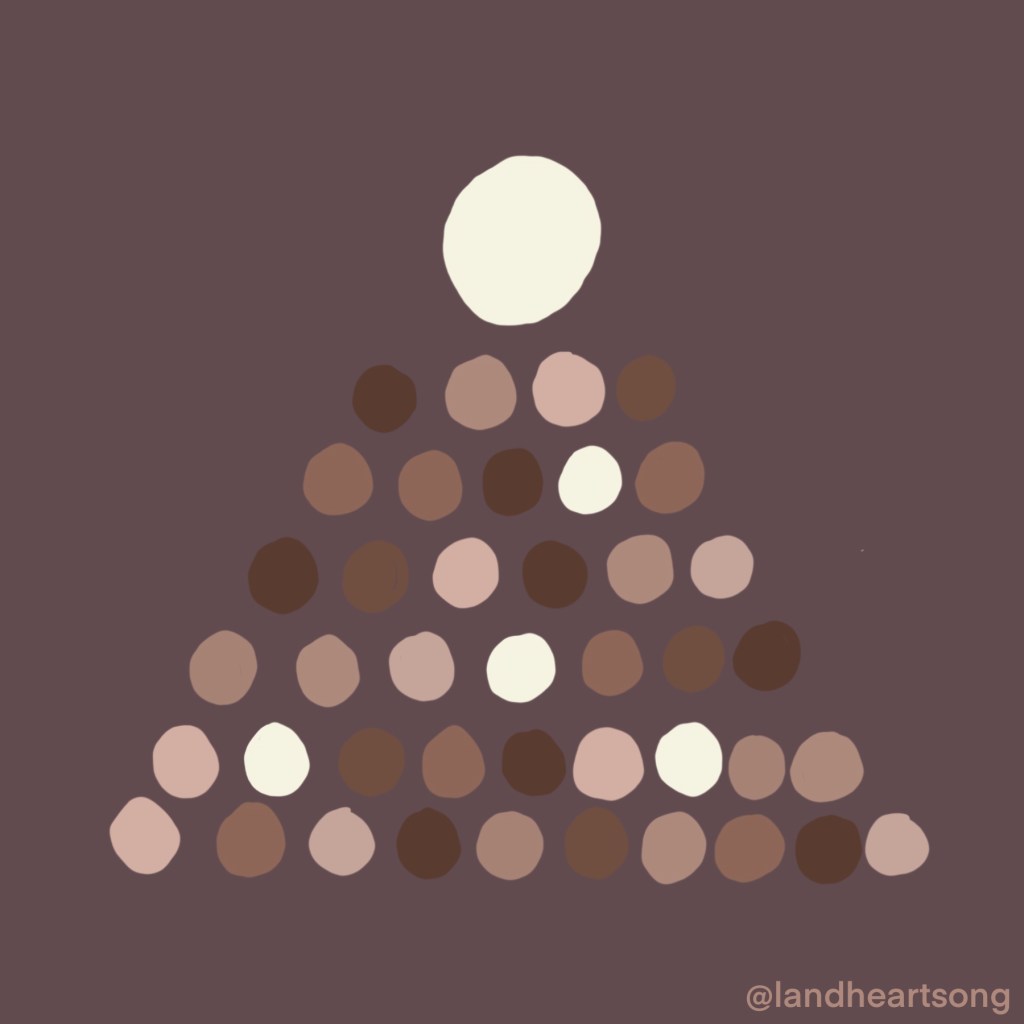
As a singer-songwriter, I reflected on Kimmerer’s words. I found that I started translating her ideas to how we relate to music. I think of the triangle as our modern day connection with music. Most adults I talk with will share words like: “I can’t sing,” or “that’s great that you can sing and do that with children. I can’t do that.” There is a sense that to be able to sing, you need to sound a certain way. There seems to be a lot of fear around one’s voice being heard if they don’t sound a certain way. I think that thinking might stem from how we consume and connect with music.
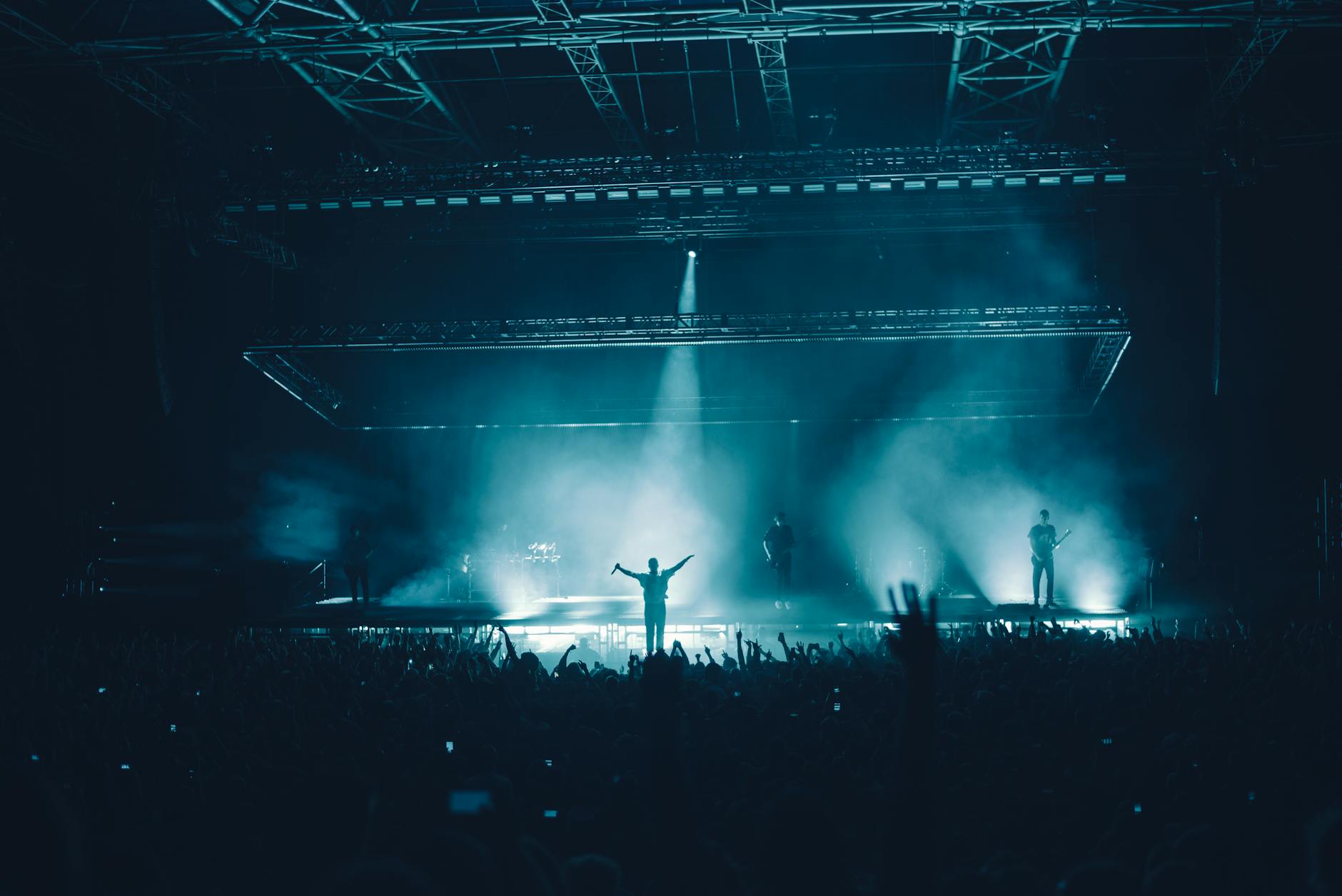
When I look at how music is shared in the music industry, there are the few people who are on stage, and the many, many people who are below them who listen. The people on stage have a voice, literally a platform. Those who stand in the audience don’t. I see a triangle- do you?
It’s worth questioning the ramifications of connecting with music in this way. Some questions I have been thinking about include…
Who gets to be on those stages?
Whose voices are being amplified?
What do you need to sound like and look like to be on those stages?
Are all voices welcome there?
Whose voice isn’t being heard?
Whose voices and lived experiences are not being heard, seen and valued?
Now, I am a performing singer-songwriter, and sometimes it is me who is up on those stages. I am working within the systems to find my way to share my voice and offer my work to inspire others, and I don’t think I’m wrong in doing that work. So I think those stages do have a place. As well, I would definitely make mention that in recent years, I have seen much greater diversity of voices being given space on stages- everywhere from my own community to the most recent Grammy Awards. However, I think to fully connect with the power of music, we need to connect with music through the concept of a circle, too.
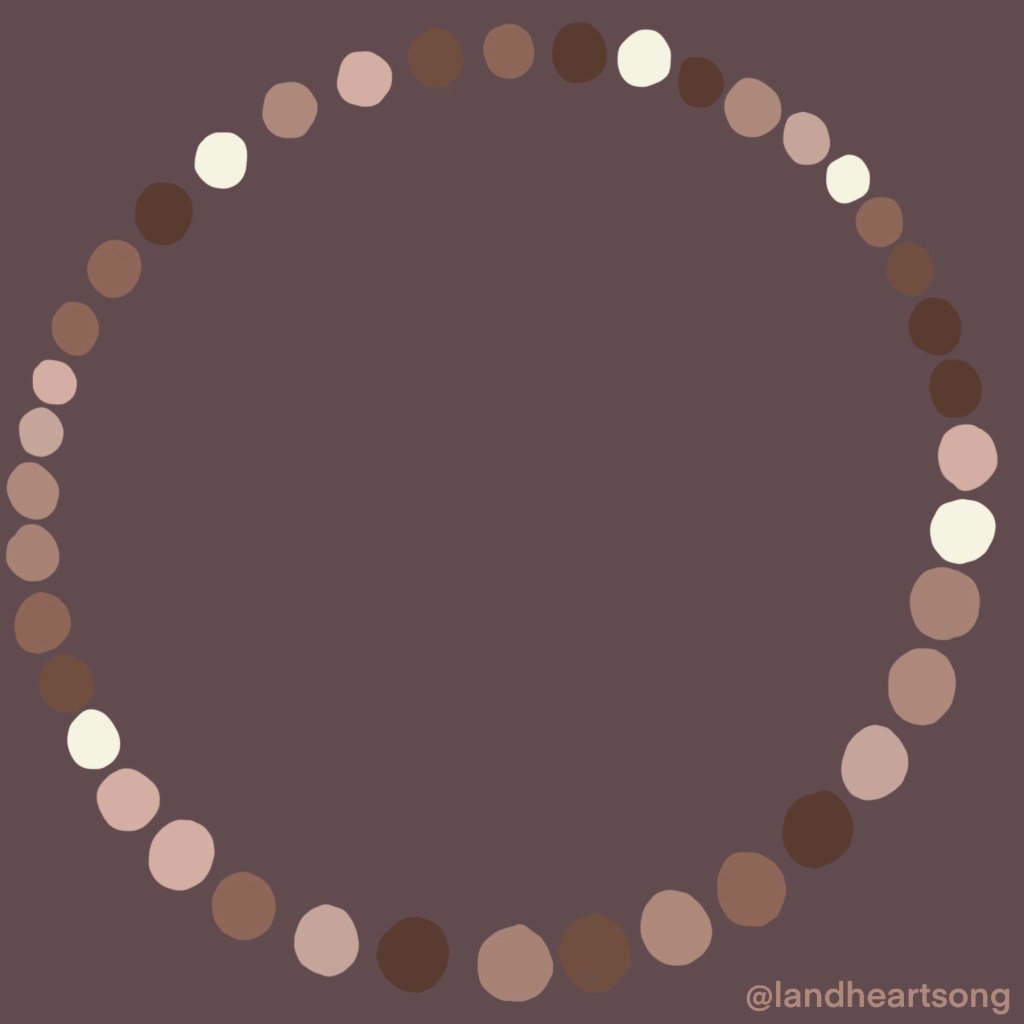
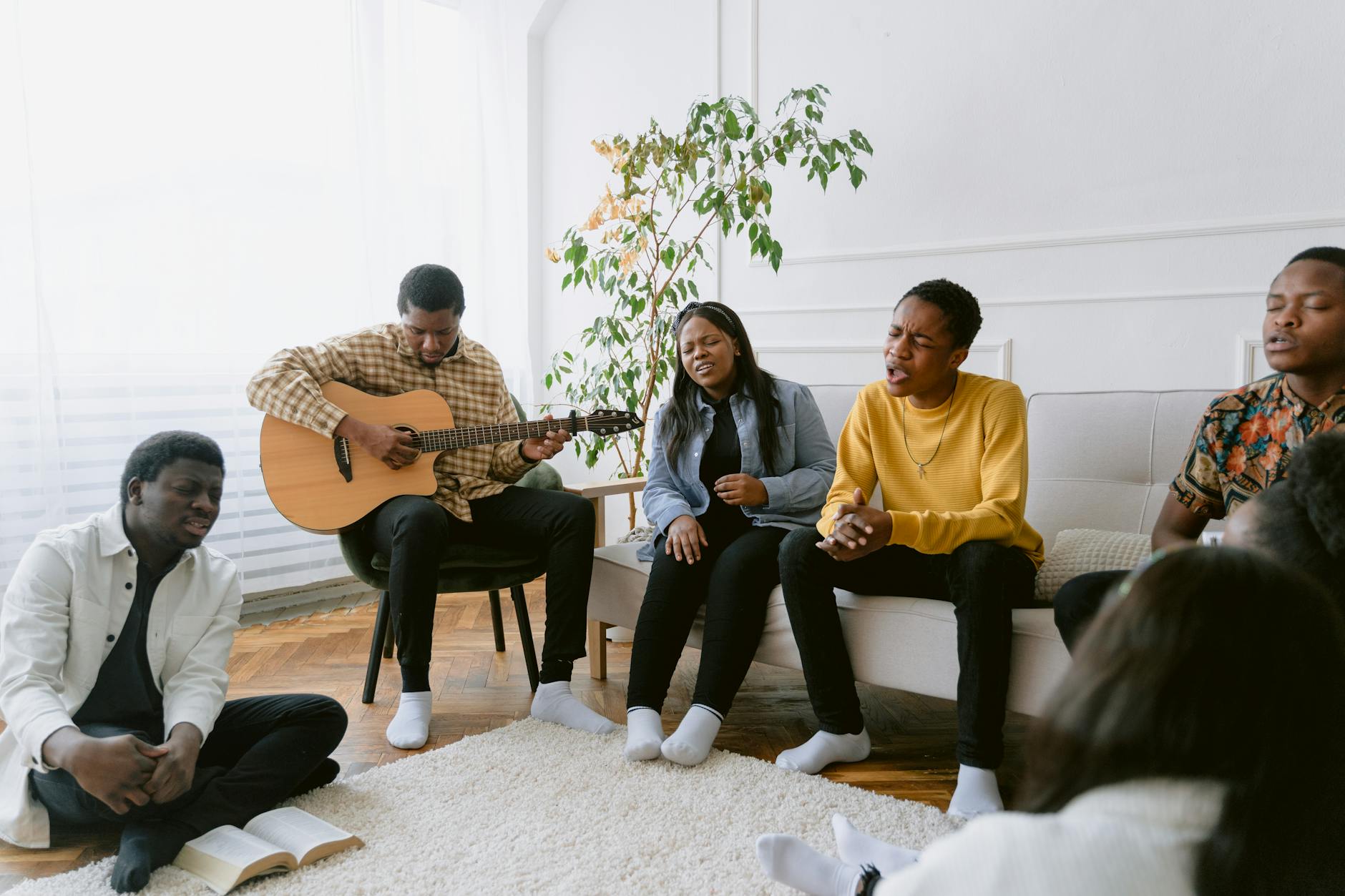
To connect with music through the concept of a circle means that we sing together- no stage, no platform. It means that your voice and my voice come together; that our voices are distinct, and yet together, we create something beautiful.
I see that connecting with music in this way has many positive outcomes that directly support working towards social justice and climate action. When we sing together, we experience the belonging of our voice within a community, as well as the belonging of all of the voices we share that circle with. We learn to care for the people we sing with, for it is with them that we are creating something beautiful. When we learn to explore our voice and get comfortable using it, no matter our musical quality, we build confidence in our voice. We learn our voice matters just the way it is. We can carry this confidence into all of the facets of our life, including standing up for what we believe in and letting our voice be heard.
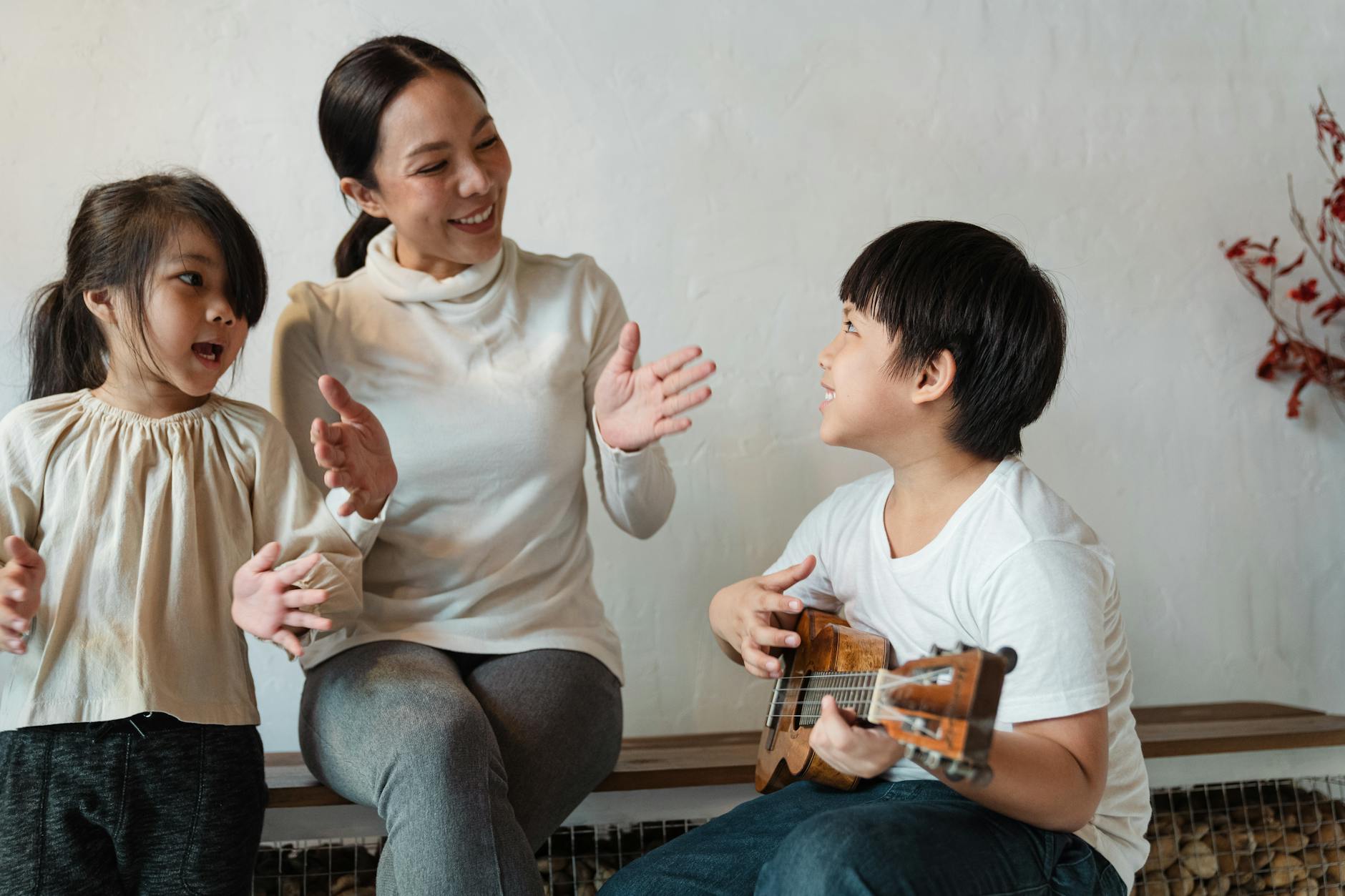
I often think of those who are spending time with children. I think of the educators, childcare providers, parents, grandparents, aunties and uncles, community members and leaders, and more. There is so much value for anyone and everyone spending time with children to explore songs with them. Children need to hear that singing is for everyone- no matter what you look like and sound like. Children need to experience that their voice matters, that it needs to be heard, and that all of the voices in their communities matter. They need to experience that together, we can create something beautiful. They need to build confidence in their voice, so that they feel empowered to speak up about the things, the people, their community, about all of the beings that they care about. How can the adults in their lives support them with these learning experiences?
By singing with them, no matter the musical quality of your voice.
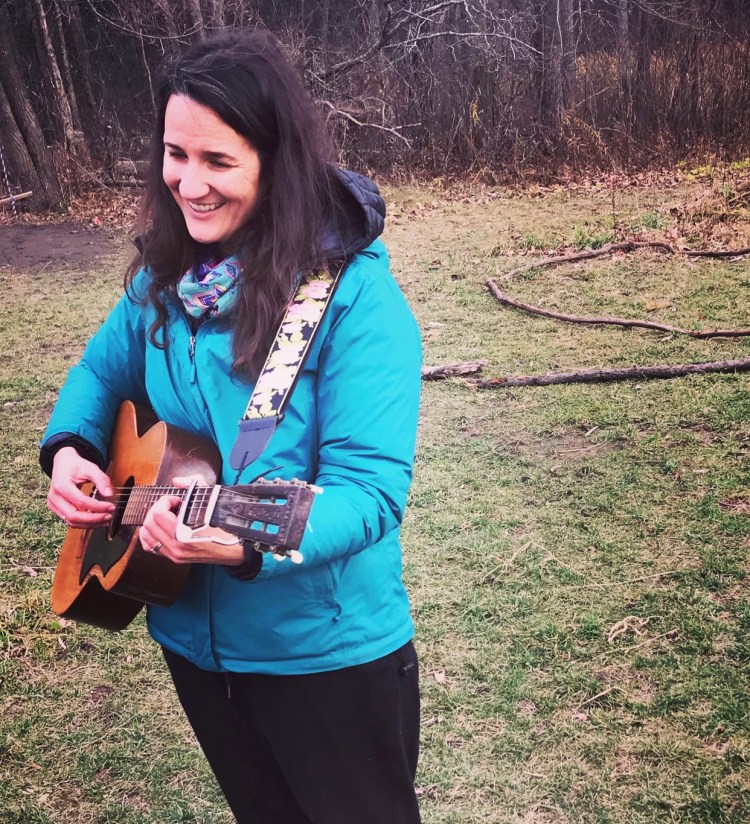
This asks us to be brave. If an adult has spent a lifetime understanding that their voice is not to be heard, this can be a very difficult ask. Having your voice heard can be a scary and nerve-wracking experience. I think the reality of living in the ‘triangle paradigm’ is that sharing your voice may not feel safe. From my privileged stance in this world as a white cis-gender woman, I wonder how much I still have to learn about this.
What I can share are some steps I take to become more comfortable sharing my voice in front of children… If they might support you in feeling more comfortable sharing your voice, go for it! And if not, that’s okay. Here are some things I do that you might want to consider trying:
- I invite children to sing along with me
- I remind myself that no one is paying me to be the next Beyonce or Celine Dion and no one has any expectation on me that I can sing as well as them
- I sing songs that I am really comfortable with, like “Happy Birthday” or other simple songs from my childhood that I know really well
- I am silly. I take those silly songs and I will try singing them with all sorts of different voices- a really high voice or a low one, a really fast voice or a slow one, and most loved of all- like I’m underwater (I sing and take one finger and pretend I’m almost brushing my teeth while I sing, and it sounds like I’m underwater)
All of these ideas take away the ‘performance’ of singing along with children. They take me out of the triangle and into the circle, and into the experience of exploring my voice alongside children.
What do you think? This is where my thinking has taken me to date, sparked by Robin Wall Kimmerer’s sharing about the triangle and the circle. My thanks for taking the time to take in these words. I spend quite a bit of time thinking about these things, and I’m grateful to you for taking them in. I am keen to continue exploring these ideas and to learn alongside you. For example, maybe you have tricks that you have used to help you feel more comfortable sharing your voice that you can share? Or maybe you would like to share your feelings and thoughts around sharing your singing voice with others? Or maybe you have resources that you would like to share? I would really love to hear from you! Let me know your thoughts with a comment, or drop me a message.
Warmly,
Tiiu
 Land Heart Song