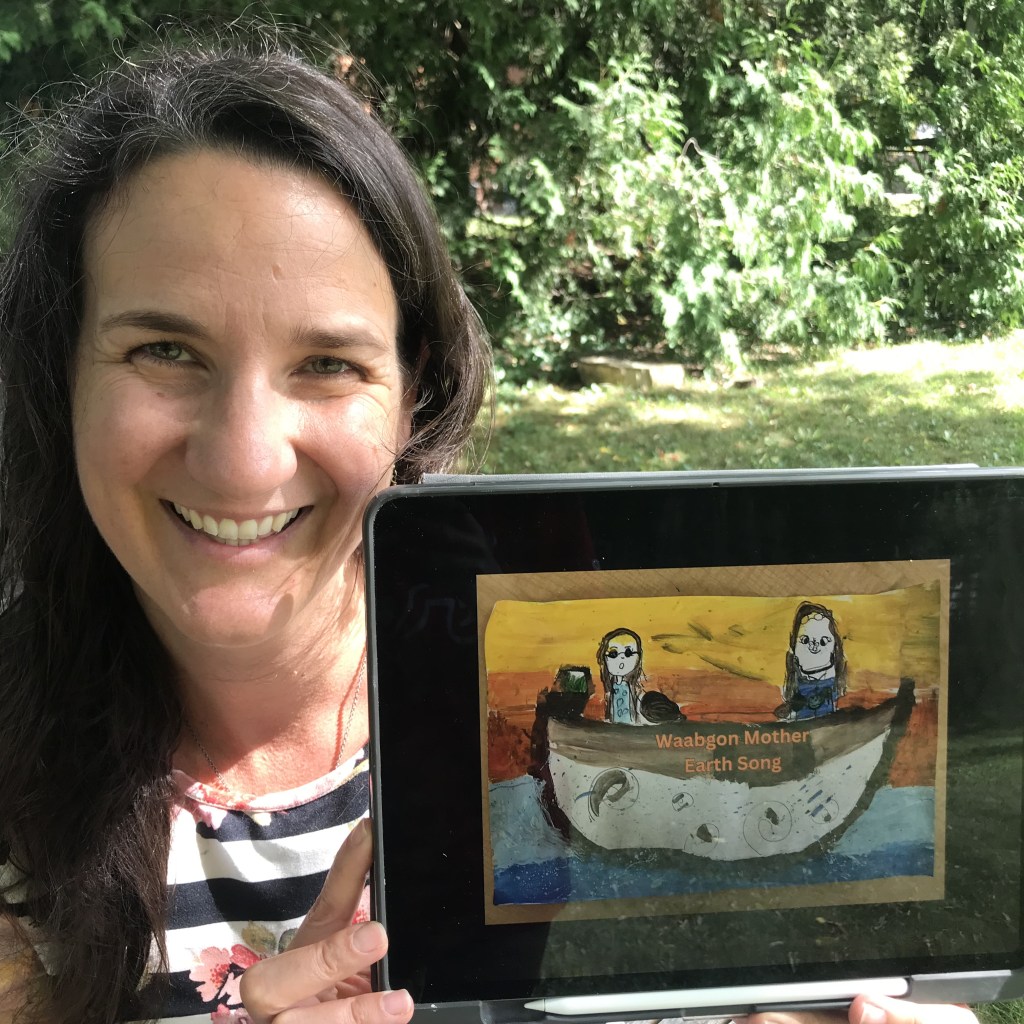
Today’s blog post is a reflection on what I have learned from my experience co-creating “Waabgon Mother Earth Song” with Hayley Williamson and the children and educators at Waabgon Gamig First Nation School. This is the second part in a two-part series, the first of which is about the creative process we undertook to write the song. You can find that post here. Today’s post is about what I have learned from the line that runs through the song, penned by one of the children: “The Earth is happy because we love the Earth”.
A number of years ago when I was early in my role as an educator, I felt a worry in me about talking to our youngest children about the idea of ‘saving the planet’. I had a sense that this likely wasn’t supportive to their mental health. I also wondered about how these kinds of messages might interfere with their interest in building a relationship with the natural world, due to the heaviness and related fears associated with them. Personally, I am rarely drawn to the things I find scary and hard.
With all of this in mind, I decided that I would focus on supporting young children in nurturing a loving relationship with the natural world. I thought starting in this way would support children in building a relationship with the land, while also offering them the many positive mental and physical health benefits of spending time outdoors. I also had the thought that children who have developed a loving relationship with the land were more likely to work to protect nature later in life. So, in my mind, I was laying the groundwork for children to engage in ‘saving the planet’ in their lifetime, without instilling the related fears and heaviness in their early years.
This thinking has been at the centre of how I approach my work with Land Heart Song; I am working to use my skills and gifts as a songwriter, storyteller and artist to nurture love for the land.
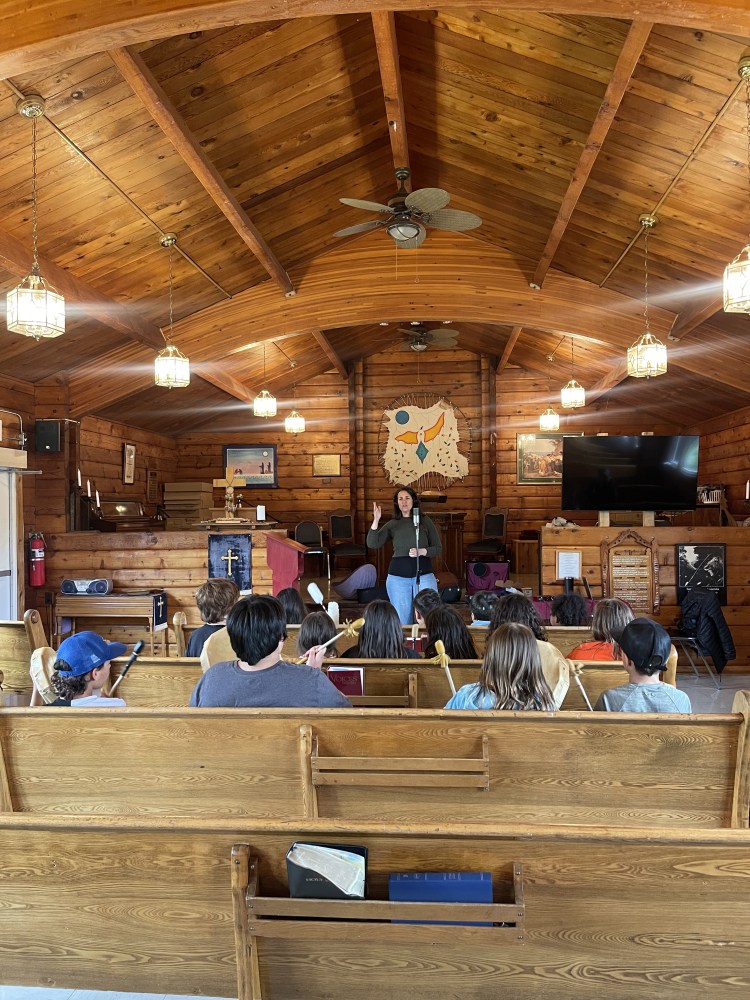
Over the last year, my work with Land Heart Song brought me to The Chippewas of Georgina Island to spend time with Hayley Williamson and the children and educators at Waabgon Gamig First Nation School, and together we wrote “Waabgon Mother Earth Song”. If you haven’t had a chance to listen yet, please check it out! You will hear the beautiful lyric a child penned: ‘the Earth is happy because we love the Earth’.
This lyric is so meaningful to me because it offers the idea that I, as a human, can have a positive impact on the environment; one that isn’t about simply reducing the negative impact of my presence. This lyric offers the idea that my love for the land is a two-way street, one I hadn’t really felt before. All of the time that I have spent in nature, feeling my love for the land grow and deepen, I hadn’t considered that the land might be happy for my presence and my love. To consider that I might be able to offer something to the land that is net-positive is profound to me.
When I then gave space for the idea to seep deeper into my body, I found it was quite an emotional experience. I’ve spent the last decade committing myself to learning about the truths of this land. As a white settler, I’ve come to understand that the colonial, capitalist systems that I have benefitted from all my life have done extraordinary harm to the First Peoples of this land and to the land itself. Holding space for all of this, and then letting myself consider the idea ‘the Earth is happy because we love the Earth” was profound. I mean, what an idea to consider – despite all of the harm… that the land might be happy because of the love I can offer?! When I let myself absorb and feel this, it was heart-opening and a lesson in grace. It is one I am still absorbing and finding my way with.

“The Earth is happy because we love the Earth” takes my previous thoughts on the work I do with Land Heart Song and offers a new depth of possibility. First, whereas I had been previously considering the health benefits for children; this idea offers that the work can also support the land in reaping the joy and happiness of a loving connection with humans. Secondly, this idea offers that the work needn’t be based on the underlying ‘save the planet’ messages that are rooted in fear and guilt; rather, the work can be rooted in love. While this may seem a small and simple thing, it is actually a significant shift, particularly for myself. It means I have the opportunity to connect with this work from a loving place, and not from centering myself in the guilt and all the hard feelings attached with the ‘save the planet’ messages.
The children chose to end the song with the line “Please take care of Mother Earth”. With this, the children are offering a call to care for the natural world, coming from a place of love. To me, this affirms that we can indeed centre love in this work.
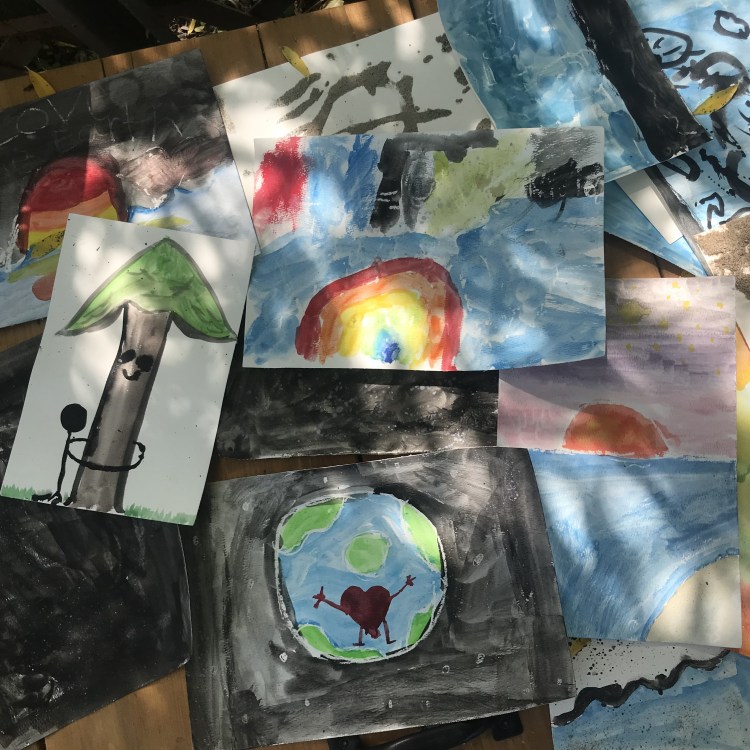
This experience has been a collision of worldviews, and it has taken my heart and my head and stretched them in really good ways. I have learned a lot from my time with the children at Waabgon Gamig First Nation School, and from spending time reflecting upon what I hear and understand from the song “Waabgon Mother Earth Song”. I’ll carry the words of the children in my heart and continue to give them space to open me up to new learning.
I’m curious to learn from you. You will have your own worldview, and your own experience with this song. What do you hear when you listen to the voices and words of the children? What might you take away from “Waabgon Mother Earth Song”?
I am also keen to let the children know their song is being heard! Leave a comment or send me a note to share what you think of the song, and I will send your words along to them.
Warmly,
Tiiu
 Land Heart Song