Welcome! This is the first part of a ten-part Video and Blog Post Series, aligned with the songs on “Songs for Tree”. You can find an overview and all of the other posts to date in this series here. Let’s explore together the power of song to connect children with the land!
Music Video & Lyrics
Here is the lyrics video! It features my dear friend, Joy the Robin.
Introduction
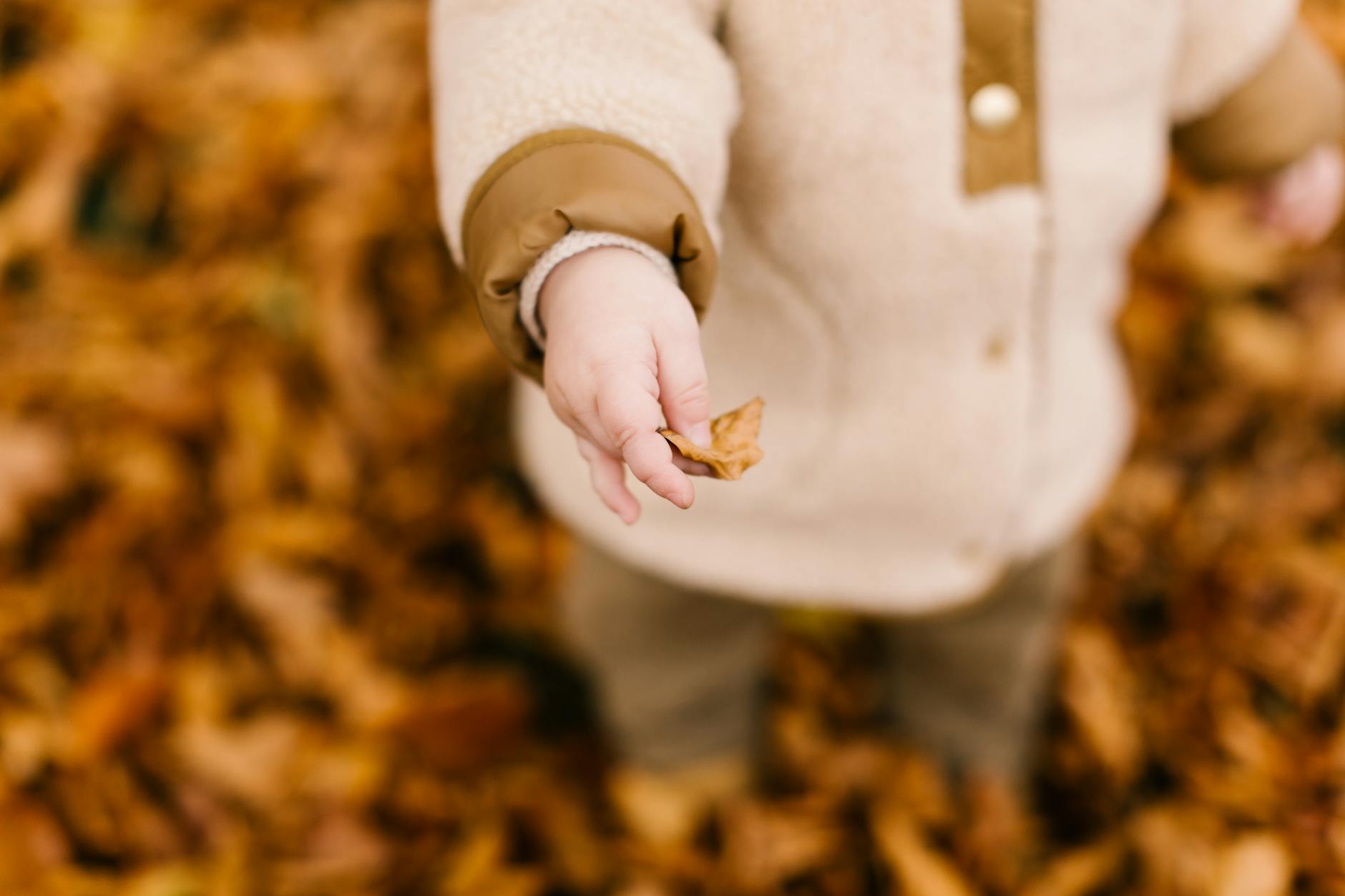
Green Leaf is one of my favourite songs to sing with children. It is the perfect song for the cooling fall days, when the trees start to change colour, which is what is happening right now in Williams Treaties Territory. This song is very singable, easy to remember, and a little silly. Over the years, I’ve had lots of fun using this song to inspire connecting children with the land in many different ways. In this post, I’ll share my experiences and thoughts about how to use this song to nurture a relationship with the land. Read on!
PUPPET FUN, BIG AND SMALL!
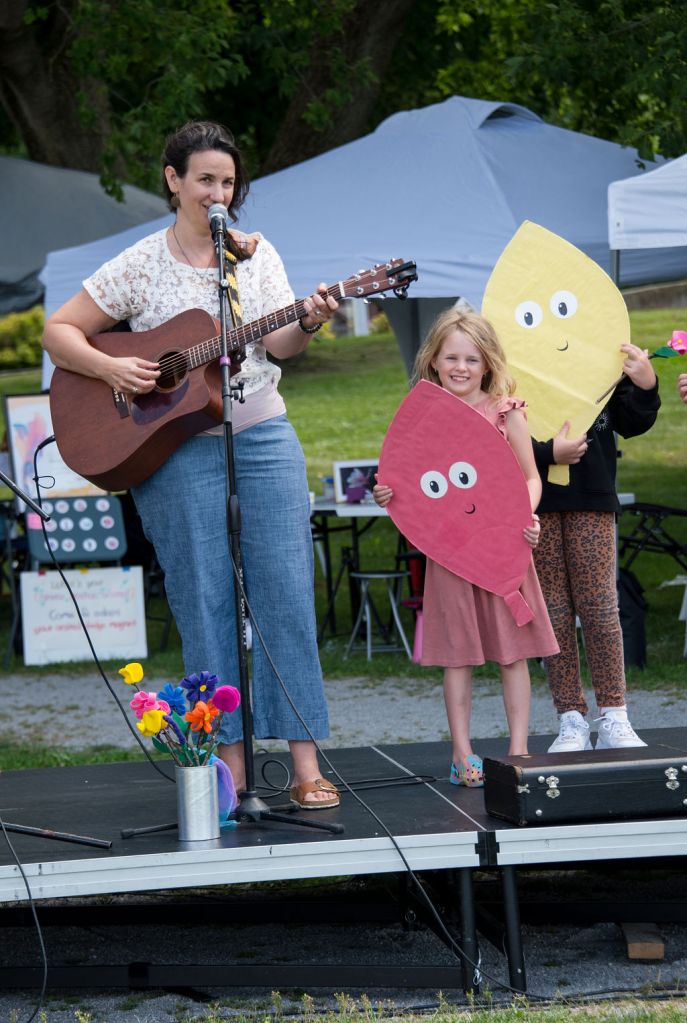
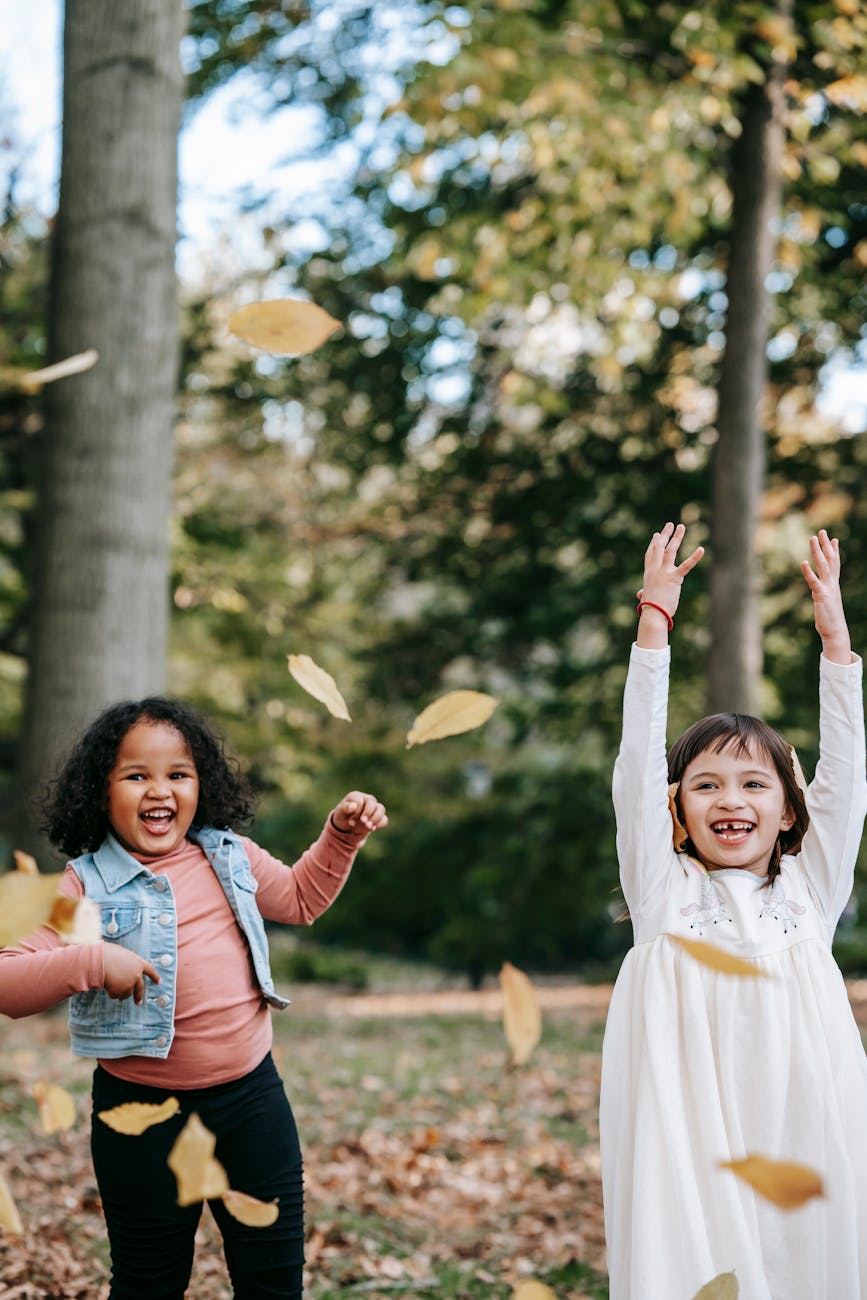
There are lots of opportunity for dramatic and imaginary play with this song! One of the ways I have supported this is by creating large leaves that children can dance with, and then I invite them to become different characters in the song. The lyrics go:
Red leaves on the ground make the sweetest sound
I like to kick ’em all over my town
Red leaves are looking at me and I say,
“Red Leaf, where is Mr. Green?”
When a child holds one of the leaves, they become that leaf, and can dance along and answer the question!
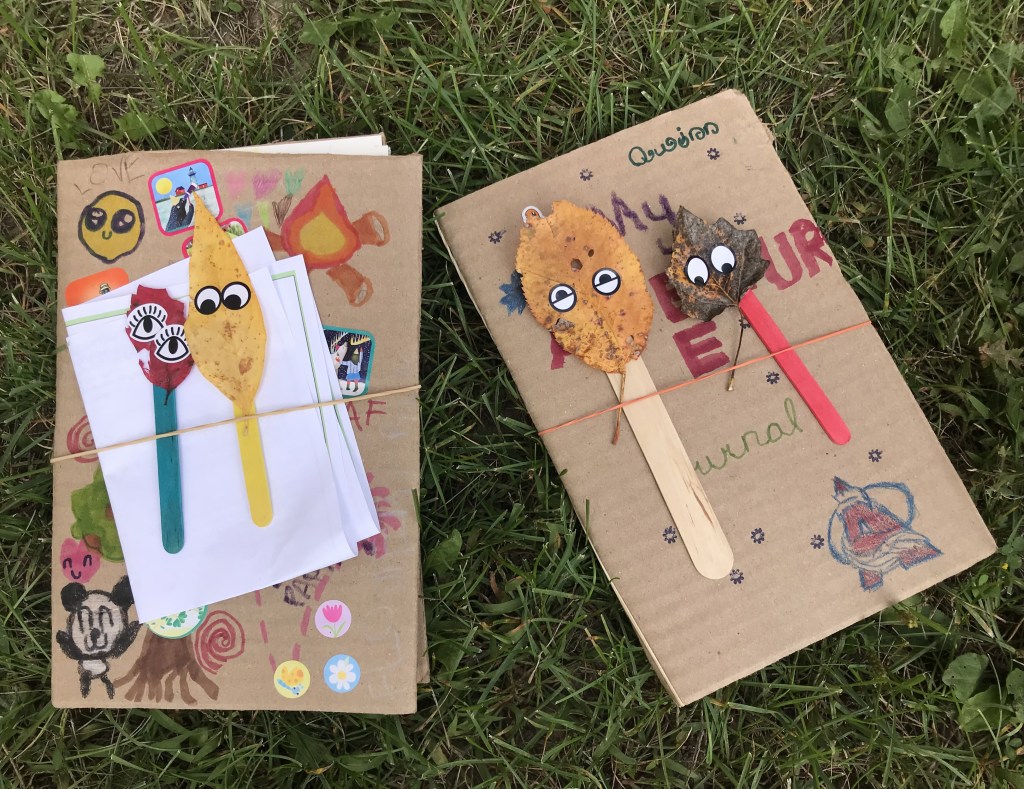
I’ve also had a lot of fun collecting fallen leaves and adding eyeball stickers and a popsicle stick to them. In this way, we instantly have leaf puppets! I invite children to play with their puppet and find their ‘puppet voice’. Children have fun pretending to be their leaf, and having conversations with other leaves! This can be simple dramatic play, and if you like, you can always build this into something further, like a little puppet show. I love playing with puppets with children, as it’s a great opportunity to build oral language skills!
WRITING
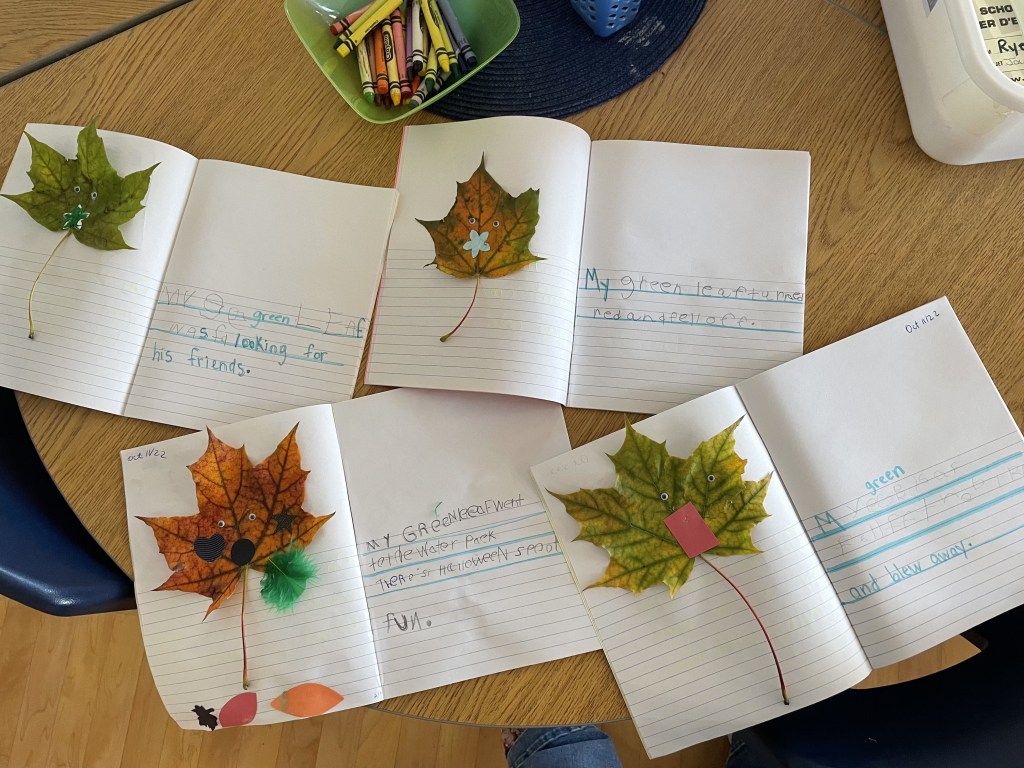
I’ve heard from educators who have used Green Leaf as a prompt for journal writing! They have listened to the song, and then taken children out to find a leaf. Children are then encouraged to think about why the leaf might have changed colour, and to write their ideas down in a nature journal.
INQUIRY-BASED LEARNING
“Green Leaf” can support inquiry-based learning in a number of ways. If the concept of inquiry-based learning is new to you, I invite you to check out the Introduction post to this blog series, where I offer some background and resources to better understand what this means. A Coles Notes version is that it is about stepping into the process of learning alongside children- and “Green Leaf” can support you with that in the fall months, so let’s dive into some ideas!

🍁 A provocation: I have sung Green Leaf with children before we go on a Fall outdoor adventure, asking them to make predictions about what colour leaves they think we might see outside. I’ll then add their ideas to the song as we sing along. When I sing the song in this way, I only ever focus on one of the verses and repeat it every time, so that children might easily sing along.
For a provocation, you might also want to play the video, and then do a prediction brainstorm with children, asking what colour leaves they think they will see when they go outside. Both of these strategies get children thinking about colours before they go outside, and have them noticing the changes and starting to ask questions.
🍁 During the learning: As children notice the changing colours, they might become curious about why it is happening. In Green Leaf, we ask the question, “Red Leaf, where is Mr. Green?” When I sing this song in circle with children, we play pretend, and children become Red Leaf. It’s fun to listen to how they answer this question throughout an inquiry; it is a way for them to share their growing understanding of why the leaves change colour. When we sing the song as a group, many children have the opportunity to play pretend and answer the question, and together, we build our knowledge of the changing seasons.
If you don’t want to lead singing with children, you can also play the video, and then ask children to take turns pretending to be different coloured leaves, and can do an interview with the leaves, asking them where Mr. Green went. Fun!
🍁 After the learning: If you have gone on a learning journey with children to learn about the changing colours of leaves, Green Leaf offers a wonderful opportunity for children to share their learning through song. You can use the video to help children learn the tune, and then work together to prepare a little dramatization of what they learned. Each time you get to the part of the song, “Red Leaf, where is Mr. Green?”, the children could offer a prepared response, offering all that they have learned through their inquiry. This would be such a fun way to share the learning with others- perhaps younger children and with families!
Green Leaf tells the story of the joys of playing in fall leaves, and the questions that might come from looking closely and noticing the changing colours. The song asks- “Red leaf, where is Mr. Green?” There are so many different ways to answer questions. In my work, rather than simply answering the questions, I try to support the land in teaching us, and I try to support us in coming together to share ideas and build our knowledge together. As a first-generation Canadian, my family is very new to this land, and so I like to support Indigenous voices and perspectives being a part of our growing relationship with the land.
ACCOMPANYING PICTURE BOOK
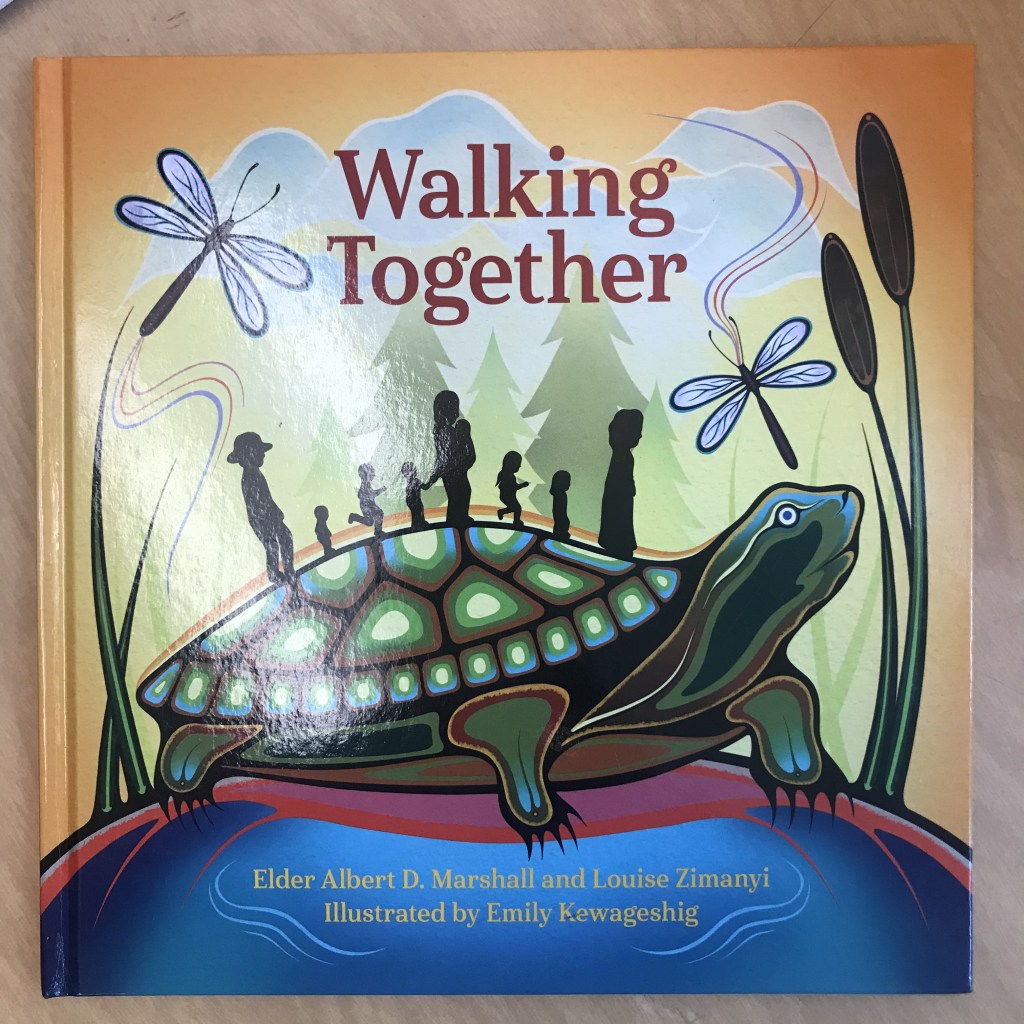
“Walking Together” is a beautiful picture book that supports how we might share stories and learn together about the land and all of the people we share the land with. “Walking Together” is written by Elder Albert D. Marshall, a member of Moose Clan of the Mi’kmaw Nation, and Louise Zimanyi, a French-Canadian and Hungarian descent; it is illustrated by Emily Kewageshig. I like to read this book with children to frame how we might listen and learn together, and it is a beautiful accompaniment text to support your wanders and exploration with Green Leaf!
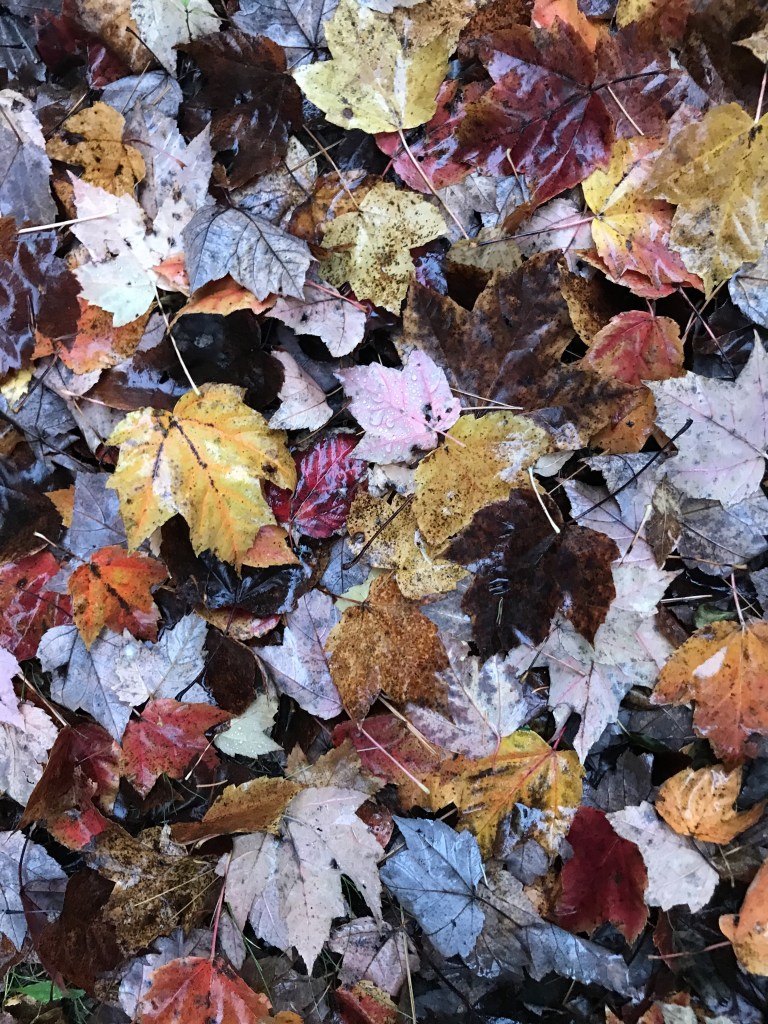
so many leaves! so much wonder!
I hope this post has inspired you to bring “Green Leaf” into your fall wanders. I invite you to share your ideas and experiences in the comments below or by dropping me a note.
To further support this work, please consider doing any or all of the following:
To support you in connecting with this work, consider doing any or all of the following:
1- Join my email list. I send an email monthly with the latest offering, so this ensures it goes straight your inbox!
2- Follow my YouTube page. This will bring the videos to you the second they are posted!
3- Support my Patreon Account. I am offering this work through YouTube and this blog as I wish to make this work accessible to everyone. Should you have interest in supporting the growth, development and depth of this work, you can do so through my Patreon account.
Alright, friends! Thank you for being here and taking the time to take in this work. I hope it sparks some fun and wonder in your days.
Warmly,
Tiiu
 Land Heart Song
2 thoughts on “Songs for Tree – Video & Blog Series – Part 1: Green Leaf”