Welcome! This is the sixth part of a ten-part Video and Blog Post Series, aligned with the songs on “Songs for Tree“. You can find an overview of this series and all of the other posts to date here. Let’s explore together the power of song to connect children with the land!
Music Video & Lyrics
Here is the lyrics video! It features my dear friend, Joy the Robin.
Introduction
When I think about it, I can remember vividly the precious moments I have connected with animals in the wild… holding a water snake in my arms up north, seeing an owl perched on a tree branch for the first time, witnessing a large turtle swim up from the depths of a lake to visit a canoe I was paddling with friends… These moments are embedded within me, along with the excitement, wonder and connection I felt in those moments.
However, these moments are rare, and mostly I wander the land without them. Animals stay hidden, so much so that I could even believe that they don’t live in the woods near me. But when the snow falls, suddenly there is evidence right at my feet that lets me know I’m not alone, and that perhaps my next chance encounter awaits my next step.
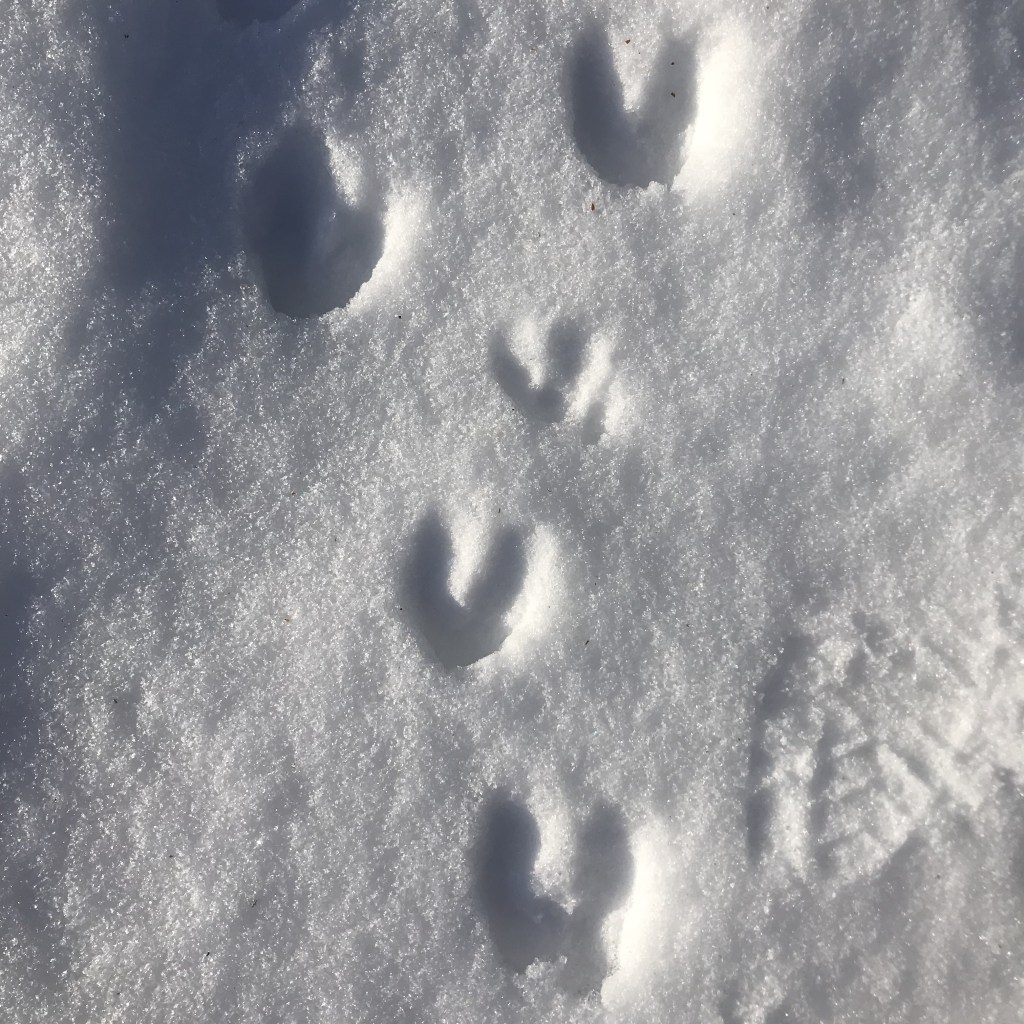
My experience has been that finding animal tracks is simply thrilling for kids. It’s so exciting for children to know an animal has been right where they are standing. They are also filled with endless wonder as they consider who left the tracks. “Tracks in the Snow” is a song to support connecting with this wonder, and to support children in making meaningful connection with the land through the winter months. In this post, I’ll share my experiences and thoughts about how to use this song to nurture a relationship with the land. Read on!
Inquiry-Based Learning
“Tracks in the Snow” can support inquiry-based learning in a number of ways. If the concept of inquiry-based learning is new to you, I invite you to check out the Introduction post to this blog series, where I offer some background and resources to better understand what this means. In general, it is about stepping into the process of learning alongside children- and “Tracks in the Snow” can support you with that in the winter months. Here are a few ideas!
🐾 BEFORE A WANDER 🐾
First, this song is a great one to sing with children before you head out into a snowy landscape. It prompts children to look for tracks:
“I’m not the only one, whose been playing with tree,
I’m not the only one, there’s tracks in the snow for all to see!
I’ve followed them up and down, followed them all around,
Tree has made a new friend and I wonder who they could be?!”
In this way, the song prompts children to keep their eyes peeled for tracks in the snow, which lays the groundwork for the curiosity to peak when you find them!
🐾 DURING A WANDER 🐾
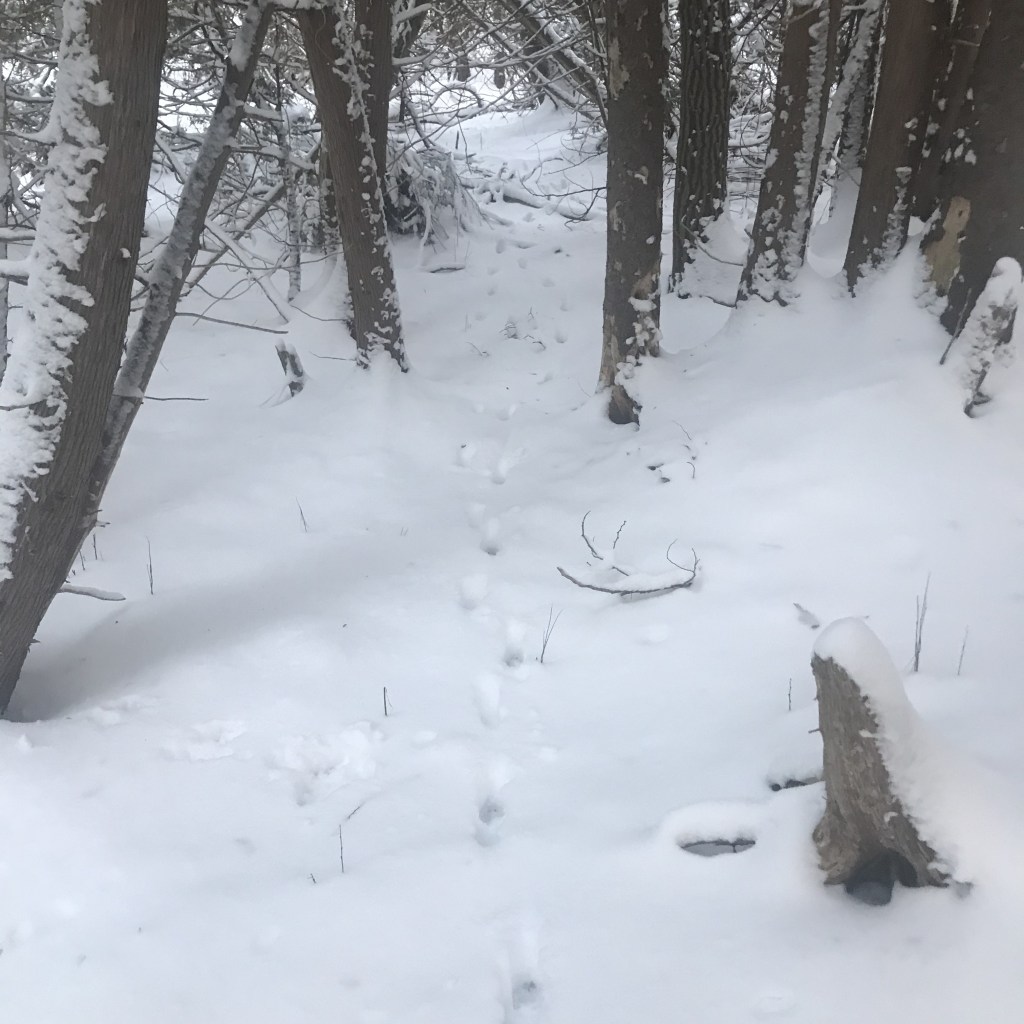
This song also supports children in connecting with the land during their time outside, as the lyrics have many questions that one might ask to help them determine who might have left the tracks:
“Is your friend big or small?
Do they walk or crawl?
Or do they soar in the sky?
Do they like to play in the night or day?”
Having these questions in mind can help children narrow in on who left the tracks. For example, the first question is “Is your friend big or small?”. This prompts children to consider the size of tracks, which is helpful to think about. For example, if the tracks are tiny, we might narrow down the possibilities and focus more on smaller animals like birds or mice! So, you might consider bringing these questions outside with you or referring to the song when you find animal tracks. Also, you might consider creating a ‘question bank’ that includes these questions. As you continue your learning journey, you might work with children to add to the list of questions to consider to help uncover the mystery of who left the tracks.
The cool thing about focusing on questioning is that it can support you in stepping alongside children as a learner, rather than feeling the weight of having to be ‘the knower’ who simply tells children who made the tracks. If you instead take the experience of tracking as an opportunity to learn and explore alongside children, you both benefit from the joy and excitement of the process of learning and building your connection with the land together.
🐾 AFTER A WANDER 🐾
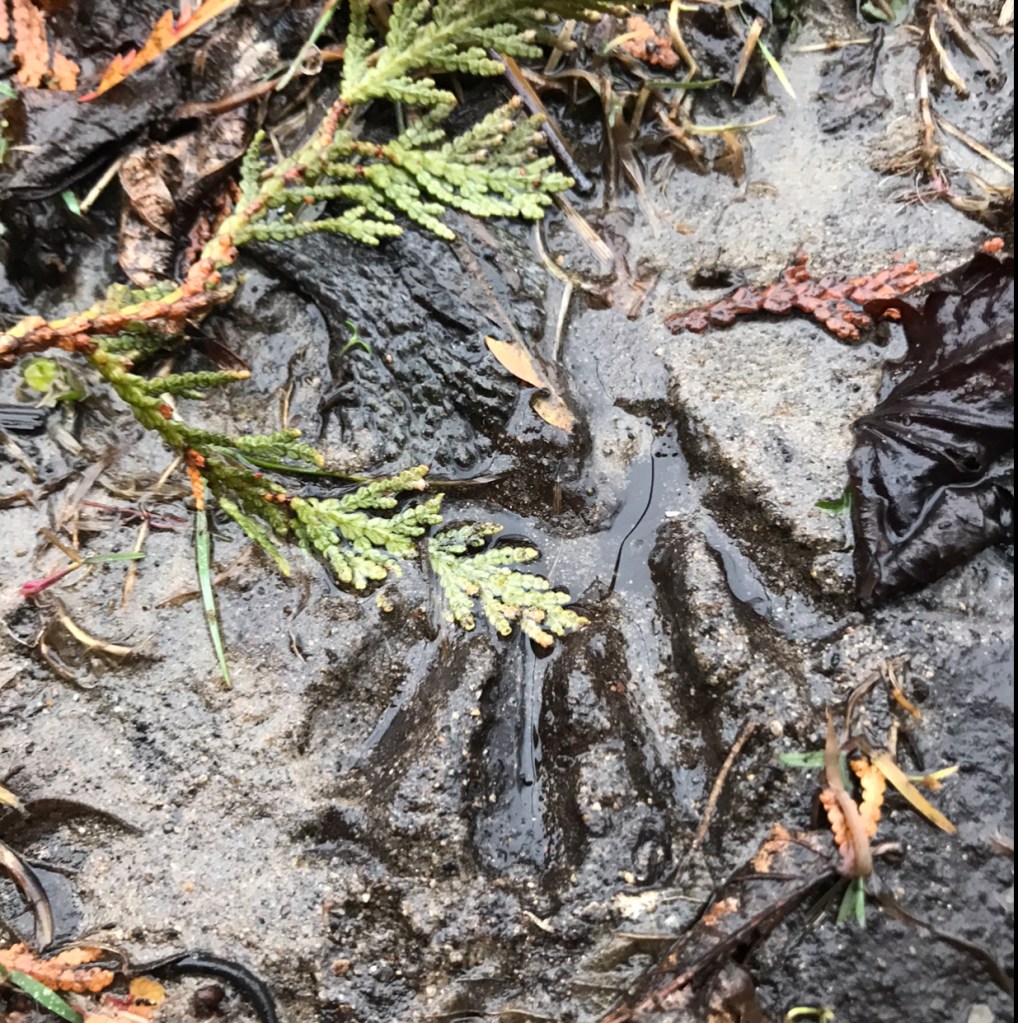
“Tracks in the Snow” is also a fun way for children to share about their experiences after being outside for a wander. Often when I sing this song live, I ask children for their suggestions. I find that this prompts them to share stories of animals they have seen or tracks they have noticed outside. It’s a great way for children to share their connection with the land with others.
It’s a Riddle! Singing the Song Live
You don’t have to go outside to reap the benefits of sharing this song with children. If you’re up for singing it live, you might want to try presenting it as a riddle, as I do at my live performances. To do this, before singing the song, I let children know that I found animal tracks in the snow just outside my house, and I wonder if they can guess who left them. I’ll then sing one round of the song, ending with a child taking a guess. I’ll either let them know they are correct, or I’ll give them some more clues about the animal and then sing another round of the song while they think about the clues to make a new guess. For example, let’s say I’m thinking of a squirrel. After one round of the song, I’ll ask for a guess, which might go as follows:
Child: Is it a fox?
Me: Good guess! Foxes are found nearby, are covered in fur and have big bushy tails, and so does the animal I’m thinking of! But the animal I’m thinking of is smaller than a fox, and they make their homes in the branches of trees! Why don’t you think a little more on it, while we sing another round of the song?!
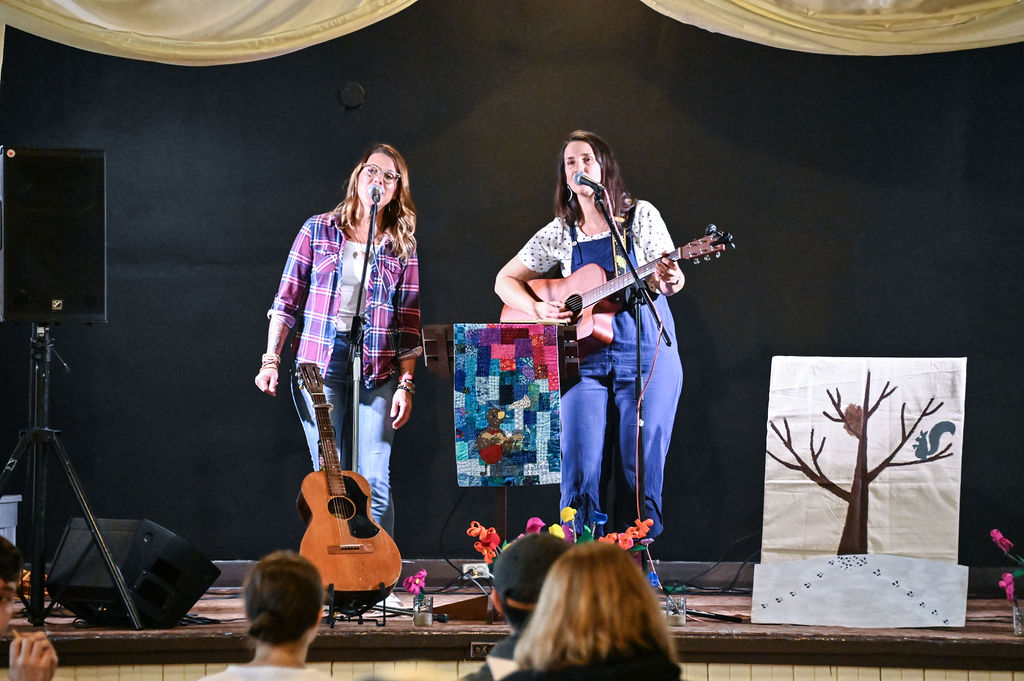
I find that using this approach is really engaging, and it also supports children in thinking more deeply about how animals are similar and different and how we use language to describe them. It’s also a great game for supporting children in building their knowledge of what animals are found nearby.
Curriculum Connections
In the above activities, there are so many opportunities to broaden the learning experience, and if you are an educator, to connect with curriculum. Here are just a few ideas:
LITERACY
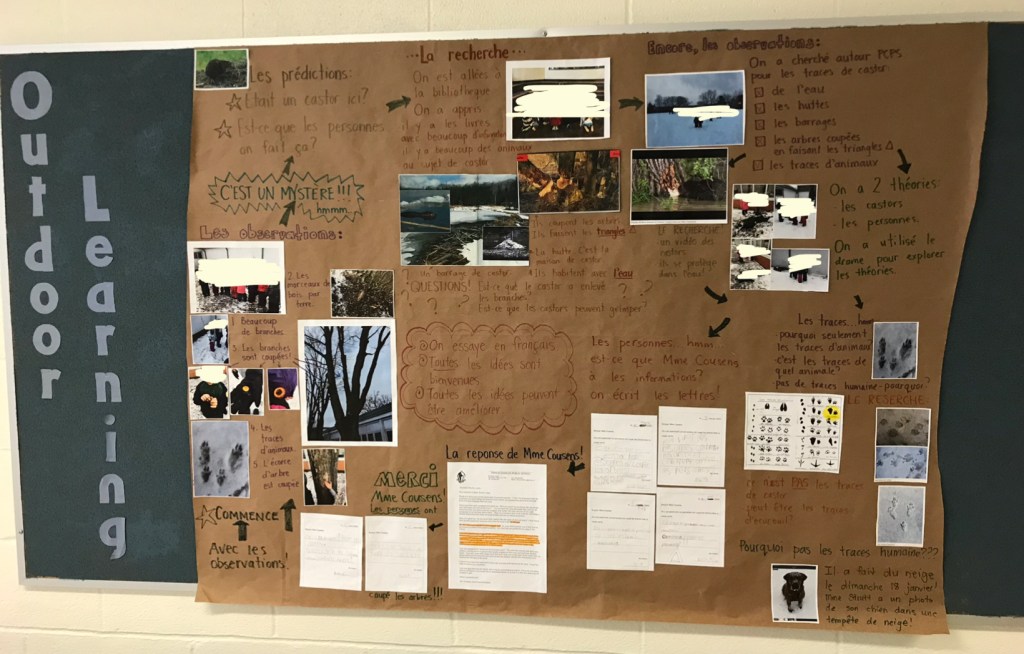
🐾 Document your journey! Take pictures of what you are finding, and encourage children to label the pictures and write a story about what they have found.
🐾 Head to the library to research animals! It’s a great authentic reason to practice reading skills, learning about different animals and narrowing in on who is most likely to leave tracks in your area.
🐾 Share your journey! As you make discoveries, you can consider how you might share that with others… perhaps you can create your own local animal guide or book!
SCIENCE
🐾 Learning about who shares the land with you in winter is a great opportunity to learn more about how they adapt in the cold months and continue to meet their basic needs.
SOCIAL STUDIES
🐾 You might create a map of your area and document what tracks you find where!
MATH
🐾 Tracks are filled with opportunities to connect with measurement in different ways. You can explore different measuring tools with children, and together determine what is your preferred tool for the winter months. For example, Juliet Robertson has a 1 meter rope in her pocket at all times for measurement needs outdoors with children!
🐾 Tracks are also an opportunity to compare numbers, especially if you bring a tracking reference sheet outside with you. In this way, you can measure the tracks and then look at the average size of the tracks of different animals on the reference sheet, and narrow down whose they are!
Animal tracking is like a big game of “Guess Who” and it is endless fun. I’m an amateur tracker myself, but if this post has you wanting to dive deeper, I recommend checking out the work of Alexis Burnett at Earth Tracks!

I hope this post has sparked some ideas for you. Sometimes the winter months can seem so long, so I hope this work might inspire you to have some fun outside enjoying the gifts of the cold season! I’d love to hear about your experiences with “Tracks in the Snow”. As always, please feel welcome to drop a comment or send me a note!
Warmly,
Tiiu
 Land Heart Song