Welcome! This is the seventh part of a ten-part Video and Blog Post Series, aligned with the songs on “Songs for Tree”. You can find an overview and all of the other posts to date in this series here. Let’s explore the power of song to connect children with the land!
Music Video
Here is the lyrics video! It features my dear friend, Joy the Robin.
Introduction
“Sweet Tree” is a song for singing on the sweet, early Spring days when the sun starts warming us up, and by midday, everyone feels quite happily overdressed. These are the days when recess time is marked by piles of coats laying on the ground, and children zooming around wearing their clunky winter boots and t-shirts. They are responding to seasonal changes, and “Sweet Tree” encourages children to look closely and see how the trees are responding too. This song connects children with the excitement and joy of the season, and in this post, I’ll share my experiences and thoughts about how to use this song to nurture a relationship with the land.
Inquiry-Based Learning
With the jackets piled on the ground, “Sweet Tree” is a song to support children in making the connection between the changing season and how they are naturally responding to the warmth they feel. The song then prompts children to become curious about how the trees might likewise be responding to the changes they feel. Here is an excerpt from the lyrics:
“I look at you,
I’m looking for clues!
Is there anything that you can tell me?
Are you hot?
Has that sun warmed you up?
Do you feel so sweet?
I look up, I look down,
From your tips,
To the ground,
I walk around and around,
Looking for clues that want to be found!”
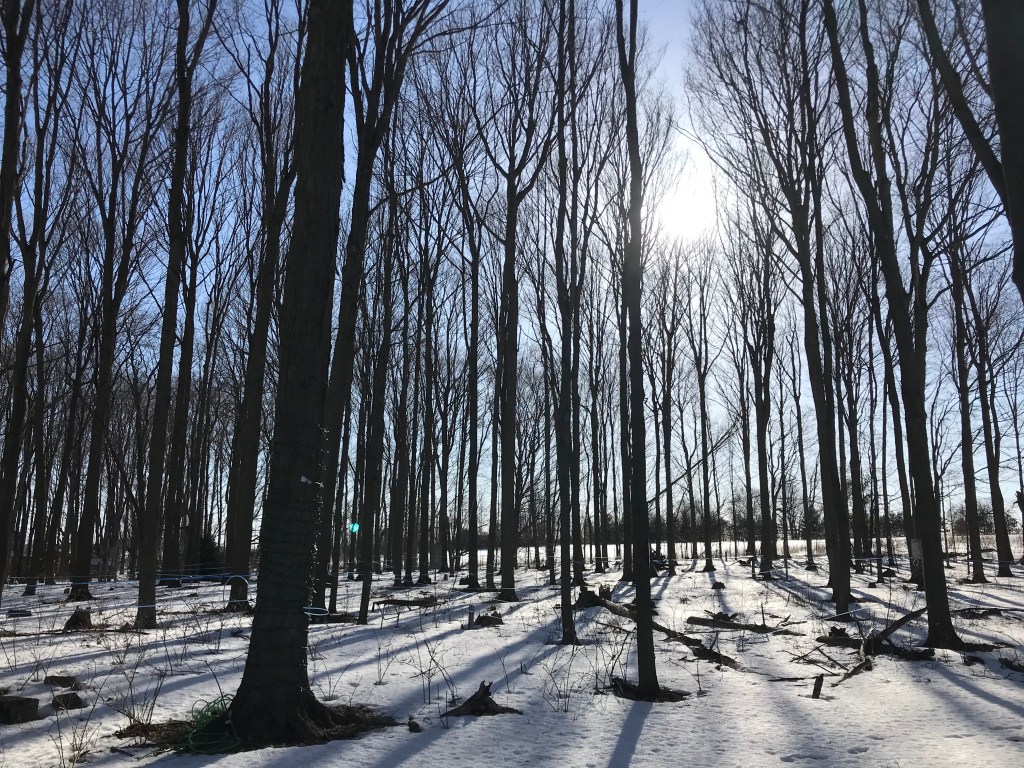
These lyrics inspire children to look closely at the trees and to investigate any changes. In my experience, children uncover all sorts of wonderful clues, and what they notice can spark a whole learning journey!
I’ll share a story with you. One year, on a bright, sunny day in late winter, the children I was working with noticed something that seemed like raindrops falling from the tall Maples we were playing under. It took a moment to figure out it wasn’t actually rain falling, but something else. It was a great mystery! The trees had recently been pruned, and as children tasted the sweetness of the drops and shared their ideas, they worked out that this was sweet Maple water! One child shared that their family taps Maple trees, and so I reached out to see if they could join us to help us learn more. Another educator in our school had a neighbour who tapped their trees every year, and they were invited to the school, too. The visitors shared what they knew and supported us in tapping the trees in the yard. We continued collecting sap for a number of days, and there were many connections made to curriculum, which you can see below. I also witnessed many magical, joyful moments as children came to know, and appreciate the wonder that the tall giants we loved to play under were also the givers of sweet, delicious Maple syrup that we enjoyed so much!
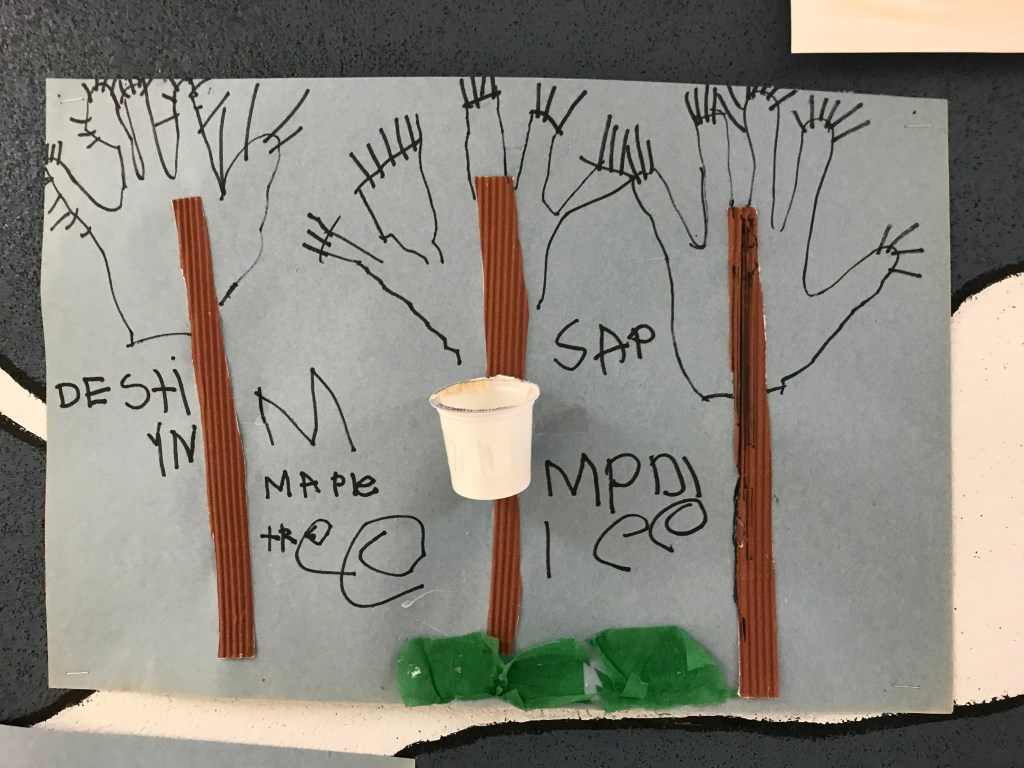
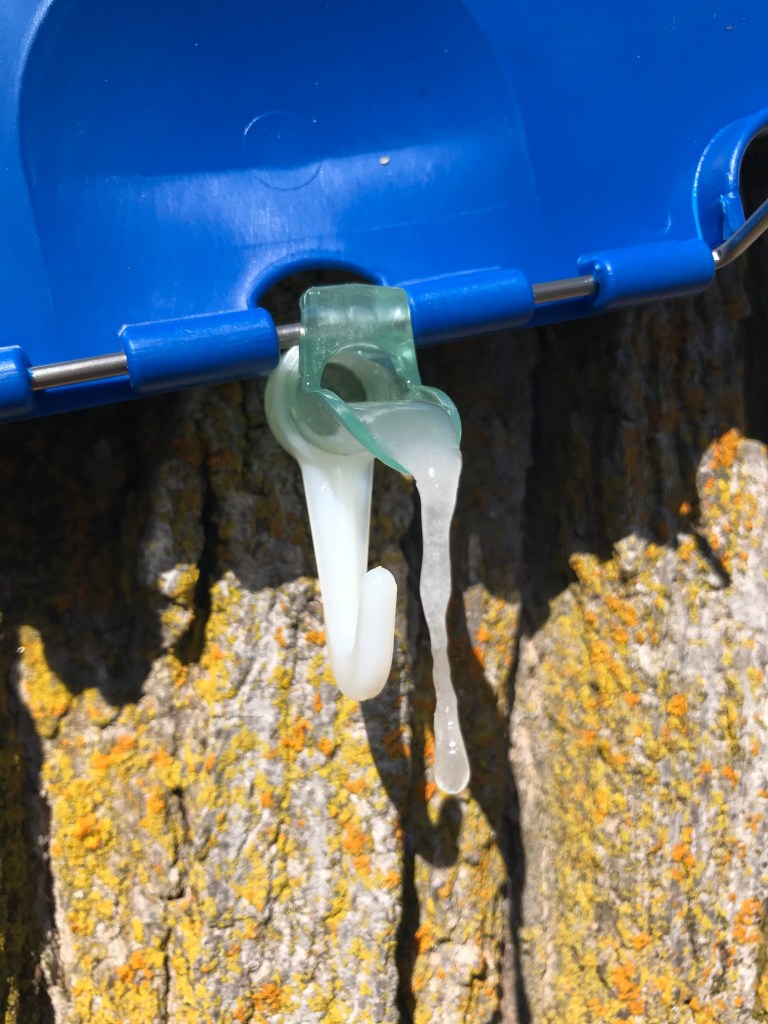
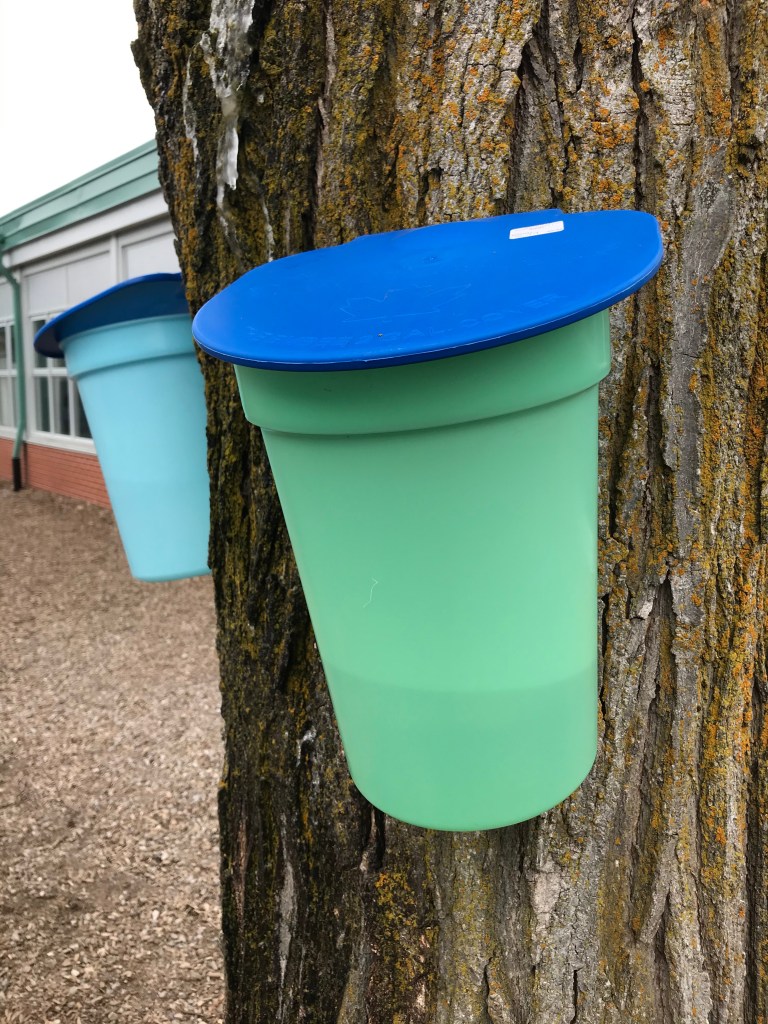
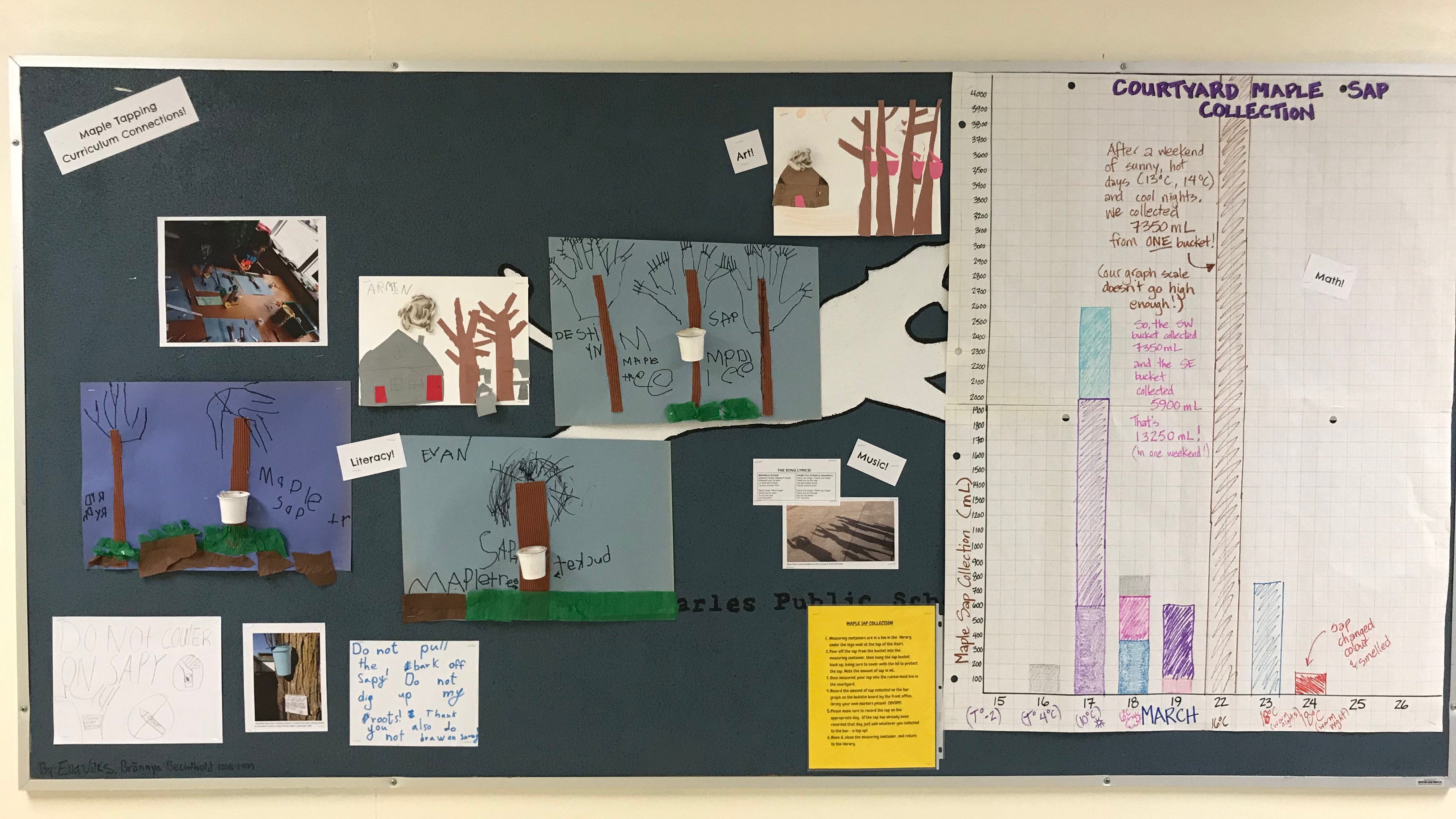
This learning journey unfolded simply by supporting children in looking closely at the trees and being curious. There is so much power in simply supporting children in looking closely at the natural world around them, and that’s what “Sweet Tree” is intended to do. Here are some ideas of how to use this song:
BEFORE A WANDER
I suggest singing the song with children, and then talking about what changes they might expect to see when you go outside and look closely at the trees. Collect their ideas so that you can come back to them and see if their predictions were true, and if there were any changes they noticed that weren’t on their list.
DURING A WANDER
“Oh tree, can you hear me?
Ain’t that sun so sweet?
Are you awake, do you want to play,
Or are you still sleeping?”
These are the chorus lyrics, and you can pull these out when you are outside on those sweet, warming days to inspire children to take a look at the trees, and see if there are any clues that the trees are responding to the warming season.
AFTER A WANDER
Singing this song after a wander supports children in thinking about what they noticed. It’s a good time to write down their thinking about the changes they are seeing. You can revisit what they say before you go out for your next wander, which can prompt children to continue to look closely for more changes. Every time they do, they are building their relationship with the trees they share the land with!

Indigenous Ways of Knowing & Leanne Betasamosake Simpson
I have found that looking closely at this time of year most often connects children with the knowledge of Maple sap and the process of making syrup. It often comes up anecdotally, as a child or two often have had an experience of visiting a Maple sugar shack, and they share that with the others in the group. The gift of Maple sap is magic and a wonder to behold, and so I find it is a lot of fun to learn more about this with kids. In doing so, I have explored ways to support children in learning that our knowledge of the wonders of Maple sap are rooted in Indigenous Ways of Knowing. I have found two wonderful resources to support this learning, both created by Michi Saagiig Nishnaabeg scholar, writer and artist, Leanne Betasamosake Simpson.
The first resource is Simpson’s book of short stories, The Gift is in the Making: Anishinaabeg Stories. In this collection, “Gwiiwzens Makes a Lovely Discovery” is a beautiful story to share with children about the discovery of Maple sap. I have enjoyed reading this story to children under the tall Maples we like to play under. This story speaks to the wonder and power that the Land has to be our teacher, when we spend time with it, and look closely.
The second resource is a YouTube video of Simpson reading this story, accompanied by images, called “Kwenzens Makes a Lovely Discovery”. It is a delight to listen to this video, particularly to hear the Anishinaabemowin language spoken by Simpson.
Curriculum Connections
There are many opportunities to connect with curriculum while looking closely at this time of year. Here are just a few ideas:
LITERACY
There are many ways to document the changes children notice over time, and lots of opportunities to connect with Literacy! Some ideas:
🔍 Create a group photo journal and write down what children notice over time.
🔍 Offer children their own nature journal to draw pictures and write about what they notice over time. These can be brought outside as the days get warmer.
🔍 Create a bulletin board that captures photos, drawings and children’s words about the changes they are noticing over time.
SCIENCE & MORE LITERACY
🔍 Noticing seasonal changes is a great opportunities to learn more about life cycles of trees and why the changes are happening. It can be an opportunity to head to the library to learn more!
Final Thoughts & Support
I hope this post has sparked some ideas for you to connect children with nature during this magical warming season. As always, please feel welcome to drop a comment or send me a note!
To further support this work, please consider doing any or all of the following:
1- Join my email list. I send a monthly email with the latest offering, so this ensures it goes straight your inbox!
2- Follow my YouTube page. This will bring the videos to you the second they are posted!
3- Support my Patreon Account. I am offering this work through YouTube and this blog as I wish to make this work accessible to everyone. Should you have interest in supporting the growth, development, and depth of this work, you can do so through my Patreon account.
Thank you for being here and taking the time to take in this work. I hope it sparks some fun and wonder in your days.
Warmly,
Tiiu
 Land Heart Song