Welcome! This is the second part of a ten-part Video and Blog Post Series, aligned with the songs on “Songs for Tree”. You can find an overview and all of the other posts to date in this series here. Let’s explore together the power of song to connect children with the land!
Music Video & Lyrics
Here is the lyrics video! It features my dear friend, Joy the Robin.
Introduction
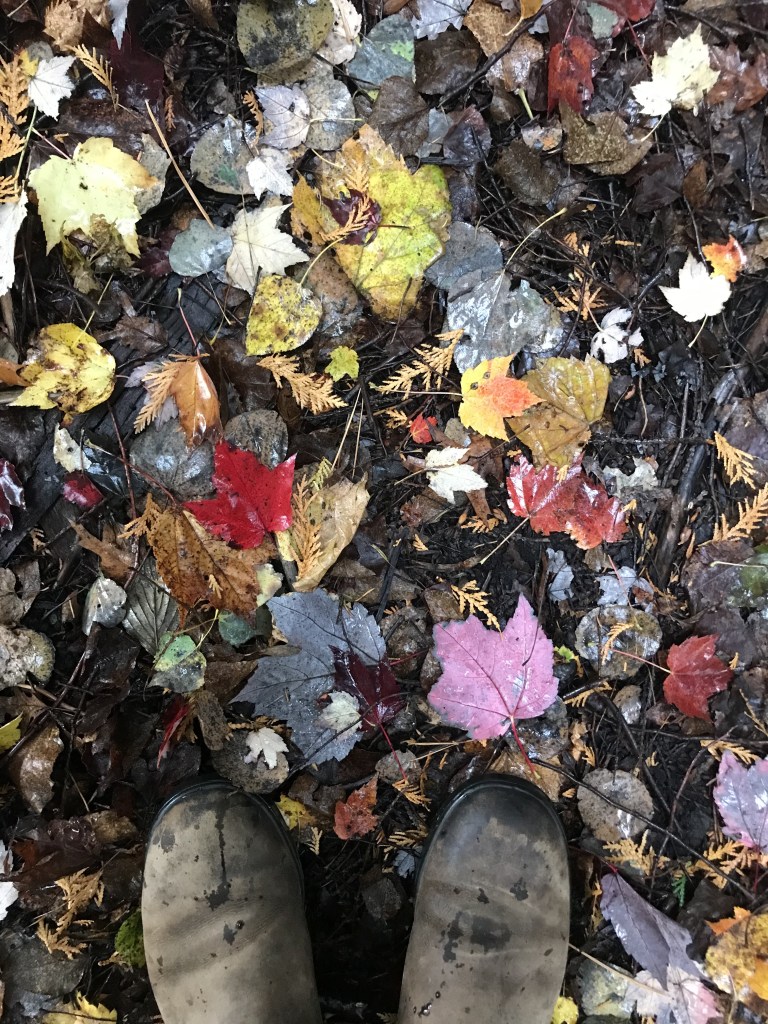
“Catch Me” is a song inspired by the blustery days of fall, when the leaves swirl and twirl, dancing around us as they make their way to the ground at our feet. The chorus takes this moment and shares an imagined message from the trees. It goes:
Catch me, catch me if you can!
Catch my leaves before they fall to the land!
Catch me, catch me, and hold me in your hands!
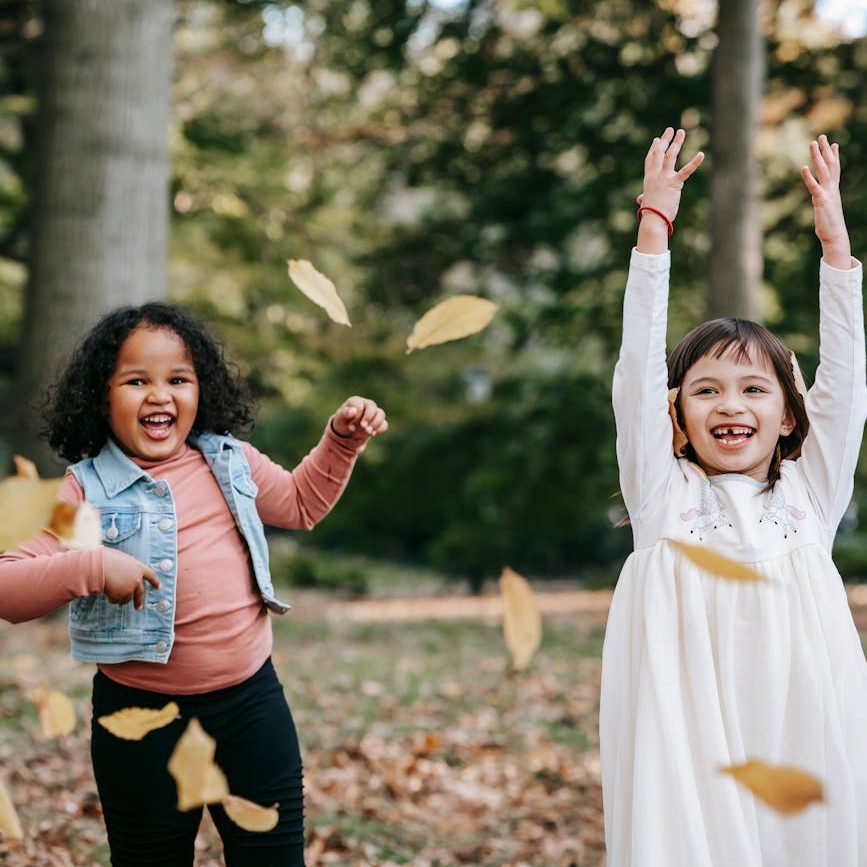
These words are an invitation to play, and to embrace the moments of connection that the land offers us with the falling leaves. In these moments, I think the land might be calling on us to play “Catch a Leaf”, which means exactly that- try and catch the falling leaves before they land! I first learned about this game from my teacher friend, Becky Vincent, who shared that the days she plays this game with students are her favourite fall days. I have to agree with Becky! I’ve learned that this game comes with a good dose of laughter and a lot of joy and excitement.
In this blog post, I’m going to share some of my thoughts on embracing these moments and how the song “Catch Me” might support children in building a relationship with the land. I am keen to explore the role songs can play in connecting children with the land, and I hope my sharing might inspire you to also share your thoughts and experiences, so that we might build our knowledge together!
So I’ll share my thoughts, and then I invite you to share your thoughts in the comments below! Ready?! Let’s GO!
Embracing the Moment & Joy
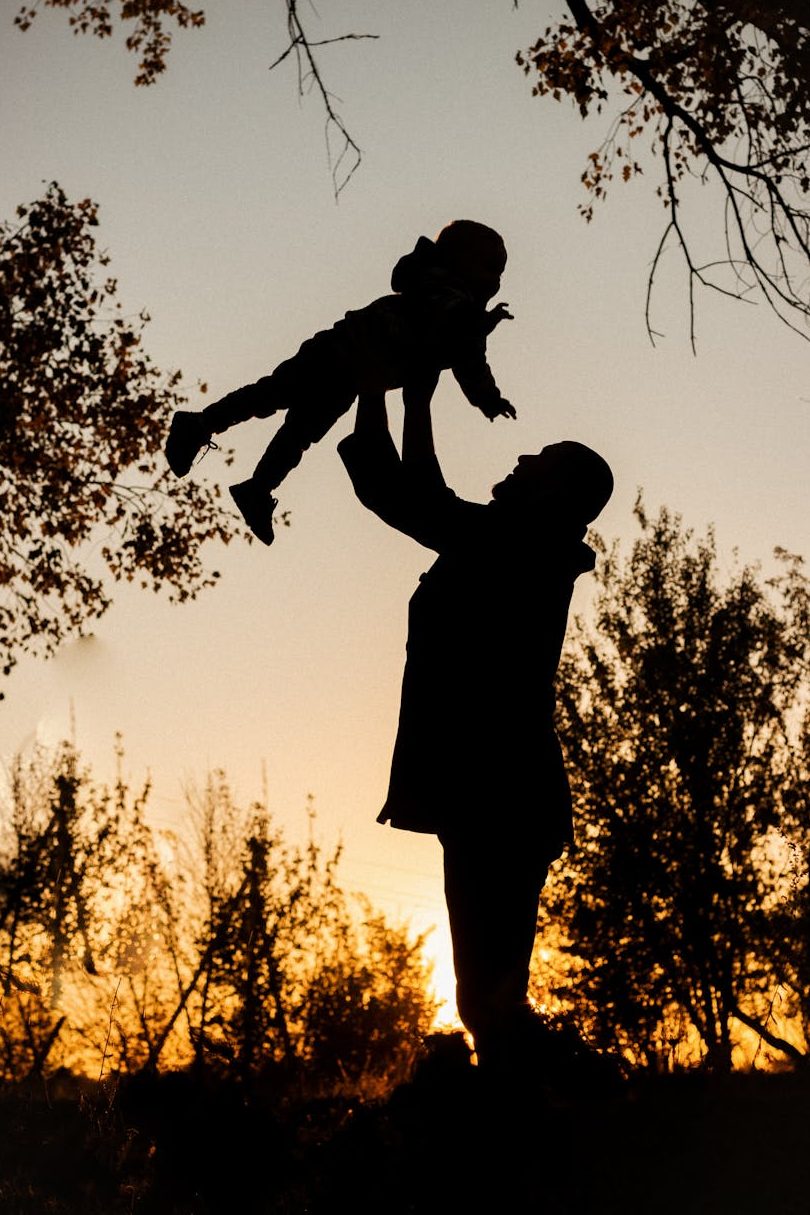
First of all, the chorus of “Catch Me” inspires me to remember to set aside anything else going on in my busy mind and my busy days and fully embrace the opportunity for joyful connection with the land when it is offered to me. Leaves are falling all around! Stop everything! Let’s catch them! Guaranteed giggles will ensue!
In my experience, shared joyful moments are golden and a great ingredient to building a beautiful relationship. For me, prioritizing them when they come along is an important offering I can share with children to support them in building their relationship with the land.
Joy & Climate Action
To further explore joy with another lens, I’d like to share with you a framework I’ve been thinking about, shared by Dr. Ayana Elizabeth Johnson. Dr. Johnson is one of the leaders in the climate action movement, and author of “All We Can Save” and “What If We Get It Right?”. She shares a framework for finding your way in how to take action towards the climate crisis, with the support of a venn diagram (you can find a visual of that HERE). In her framework, Dr. Johnson asks three questions:
1. What brings you joy?
2. What are you good at?
3. What is the work that needs doing?
It is the intersection of these three that will help unveil what you are best positioned to do to support climate action.
Did you notice that ‘What brings you JOY?’ is the first question? Dr. Johnson argues that we need to start with joy, as joy is what fills our cup and will keep us going as we find our way through these very challenging times.
Knowing the value of joy is just one of the reasons why I have been considering the importance of stopping everything and embracing the moment when the land offers a joyful moment of connection. As adults, we need these joyful moments to fill our cup. We also need to offer children the experience and the understanding that joy is important, and that joy can be found in connecting with the land.
Embracing the Moment & Inquiry-Based Learning
When we have a joyful moment of connection with the land, our hearts and minds are open and full of wonder. These moments are also opportunities to learn more together about the land we live in. In my experience, the more we learn to know someone or something deeply, the more connected we feel.
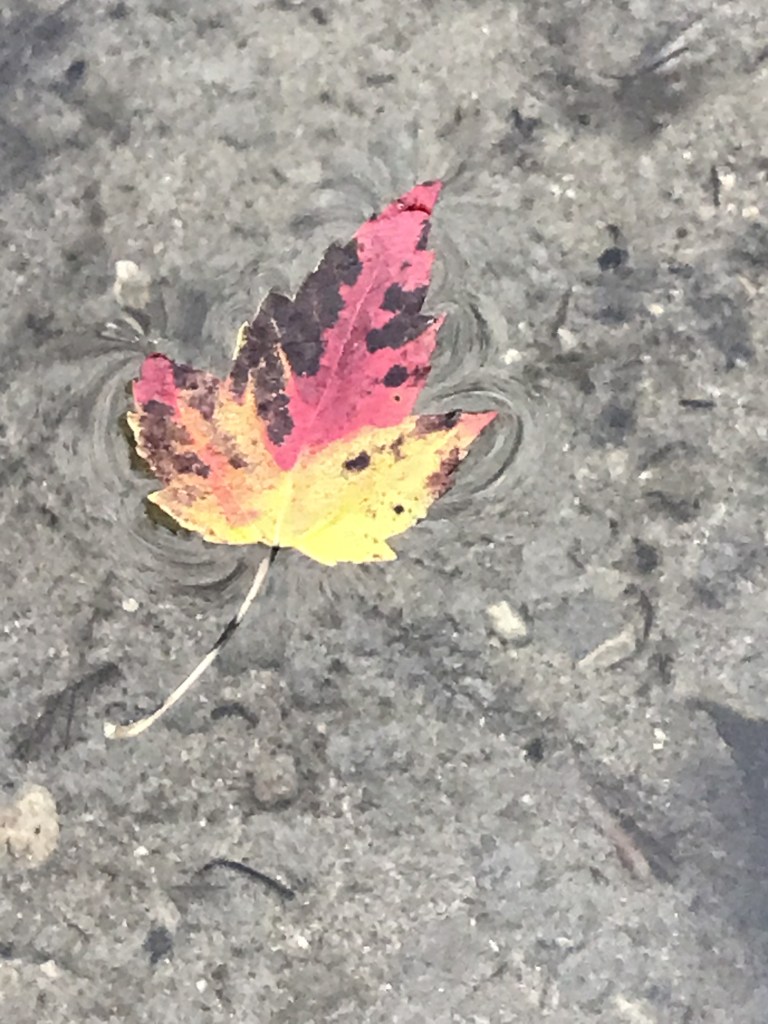
Playing “Catch a Leaf” might prompt wonderings, such as…
🍃 Which tree are these leaves falling from?
🍃 Are they all falling from the same tree?
🍃 What’s farthest a leaf will fall from this tree? Can I find the farthest leaf?
🍃 How many different kinds of leaves can I catch?
🍃 How are the leaves I catch similar? How are they different?
🍃 How many leaves can we catch in one minute?!
These wonderings can set the stage to dive into meaningful learning that is available to all of us. We can follow these wonderings as we wander the land, looking for answers, each step teaching us more about the beautiful land we live in.
To all the educators who may be reading this, these moments can be also be connected with curriculum areas such as Science, Math and Literacy. In these moments, I like to think that my job is to get out of the way and welcome the land to take the lead in teaching us. In these moments, I step alongside the children to learn with them, and offer to support their growing relationship with the land as best I can. For example, maybe I can offer writing supplies for us to document our learning journey (Literacy connection!). Or perhaps I can find related books to share the next time we are together that might help us build our knowledge around leaves in the fall (more Literacy! Science, too!). I can look to see if there are resources- picture books or videos, for example- that might support us in building our knowledge from an Indigenous Perspective (Literacy again!). One example might be Walking Together by Elder Dr. Albert D. Marshall and Louise Zimanyi, a book that shares about how we can listen and learn from the land together. I can also make relevant Math connections throughout the experience with opportunities to count and measure.
This approach has taken my understanding of what education is and flipped it on its head. At first, I was unsure and nervous about it. It was hard to trust that I was doing my job as an educator, and that curriculum was going to get covered. I was fortunate to connect with the organization Natural Curiosity. They have a wonderful pair of resources of the same name, and I continue to refer back to page 13 of the 2nd edition. It states:
“Many educators invest effort in helping children to independently navigate more open-ended forms of inquiry. Making the decision to do this may require what some have described as a ‘leap of faith,’ a trust that this way of thinking and acting in the pursuit of meaningful questions will enhance learning for their students.”
I think of that leap of faith often, as I find it very relatable. Inquiry-based learning is not what I learned that education looks like as a kid or through my teacher training. At times, finding my way with this approach has been a little disorienting and a little messy. Messy in that it’s really hard as a teacher to be with a bunch of kids and feel like you’re not totally sure what you’re doing. However, I have found that committing to getting children outside for learning as best I can (these days that looks like an hour a week per class I teach), and then embracing the moments of connection as they come and finding ways to connect it to the curriculum I need to teach… well, it’s going pretty well. It’s like I’ve been flexing a muscle, and each time I do it, it gets a little easier. I am learning to relax more into trusting all that is being offered to us by the land in that in the moment- and that the joy and connection far supersedes anything else that I might deem important… and I will find relevant curriculum connections, too!
Indigenous Ways of Knowing
As I have been learning to embrace the moments and to step into inquiry-based learning, my love and care for the land I live in has grown immeasurably. With that love has come my own curiosity and eagerness to learn more about the land, which has led me to learn about many hard truths of the history of this land and of the Indigenous Peoples who have and continue to live here. It’s in this journey that I’ve learned that centering the land and the opportunities the land offers for connection and learning is a practice that Indigenous Peoples have been doing since time immemorial. I’ve learned that it’s settler ideas and practices that have formed ideas that land connection and education are separate and that education takes place within four walls. In this way, bringing children outside, learning to embrace the moments and to step into inquiry-based learning has also become part of my journey to decolonize my teaching practice, as well as my work as a songwriter.
Support & Resources
To help me find my way with this learning, I’ve looked for a lot of support! I’ll share what has been supporting me, and I would love to learn from you if you have ideas and offerings that all of us tuning in here might continue to learn.
For me, I look for and embrace opportunities to support events and initiatives offered to the public by the Indigenous community closest to where I live, the Chippewas of Georgina Island First Nation. For example, their PowWow takes place in September, and I have gone with my family to support this event the last three years. We enjoy taking in the whole experience- the dancing and singing, the delicious food and the beautiful offerings of the vendors. I particularly enjoy listening to the MC, as they share in between songs and I learn more about their culture and traditions. If you might want to learn more about the Indigenous communities that live near you, a good starting point to check out is the online resource Whose Land.
I have also found a lot of support to find my way with this learning with the following organizations:
🍃 Child and Nature Alliance of Canada (CNAC): I’ve been a member of the CNAC facilitation team for the last four years, and in this time, I’ve learned so much from Indigenous colleagues, as well as from the Elders, Knowledge Keepers and Indigenous participants who I have had the opportunity to learn with through this work. I recommend checking out CNAC, as there are many resources and opportunities offered to connect with and learn about decolonizing education.
🍃 Natural Curiosity: Along with the books I previously mentioned, they also offer other resources, including professional learning opportunities and a wonderful monthly newsletter that highlights many opportunities to connect and learn about Indigenous Ways of Knowing.
🍃 The Outdoor Learning Store’s Four Seasons of Indigenous Learning Series is another valuable resource that lifts many Indigenous voices and perspectives and has supported my learning.
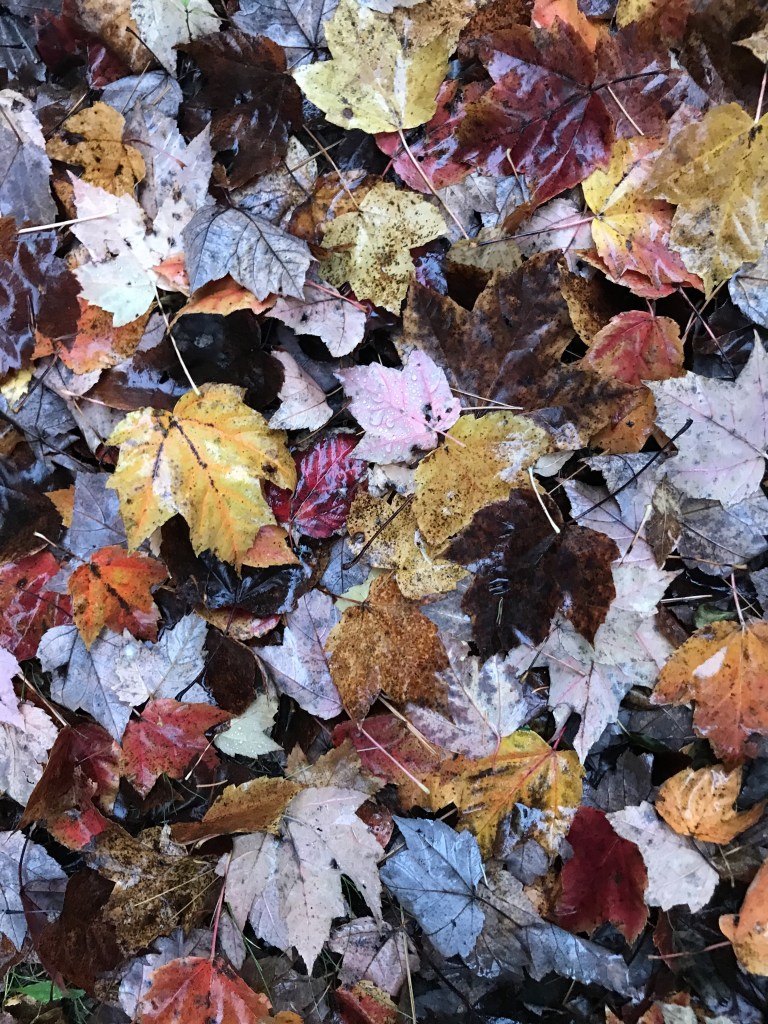
so many leaves! so much wonder!
Alright, friends! There’s some thoughts from me about how “Catch Me” might inspire and offer beautiful opportunities to connect meaningfully with the land! I invite you to share your ideas and experiences in the comments below or by dropping me a note.
To further support this work, please consider doing any or all of the following:
To support you in connecting with this work, consider doing any or all of the following:
1- Join my email list. I send an email monthly with the latest offering, so this ensures it goes straight your inbox!
2- Follow my YouTube page. This will bring the videos to you the second they are posted!
3- Support my Patreon Account. I am offering this work through YouTube and this blog as I wish to make this work accessible to everyone. Should you have interest in supporting the growth, development and depth of this work, you can do so through my Patreon account.
Alright, friends! Thank you for being here and taking the time to take in this work. I hope it sparks some fun and wonder in your days.
Warmly,
Tiiu
 Land Heart Song
Thanks for sharing. The resources links are interesting. I was not aware of the georgina island pow-wow. Keep making great music and sharing your knowledge! While I really dig written resources, have you considered also sharing this info as a recorded video or podcast?
LikeLike
Thanks for sharing these ideas! I am hoping this series might support us in finding ways to build community and share knowledge around the power of music to support children in connecting with the land, so I appreciate these suggestions! I wonder also about perhaps reading what I’ve written and sharing that at the top of the blog- kind of like an audiobook-for-a-blog type of idea. What do you think?!
LikeLike